Your Best Coaching Move With an Underperforming Team Member Has Nothing to Do With Advice
Here is the hard truth most leadership books skip over.
When someone on your team is not performing, your first instinct is to fix it. You schedule a meeting, you come prepared with feedback, and you walk them through exactly what needs to change. You pour your experience, your knowledge, and your time into that conversation.
And then they leave. And two weeks later, you are back in the same conversation.
Is it frustrating? Yes!
Does it negatively impact your team? Without a doubt.
If that sounds familiar, you are not dealing with a performance problem. You are dealing with a method problem. And there is a way through it — one that most leaders have never been formally taught.
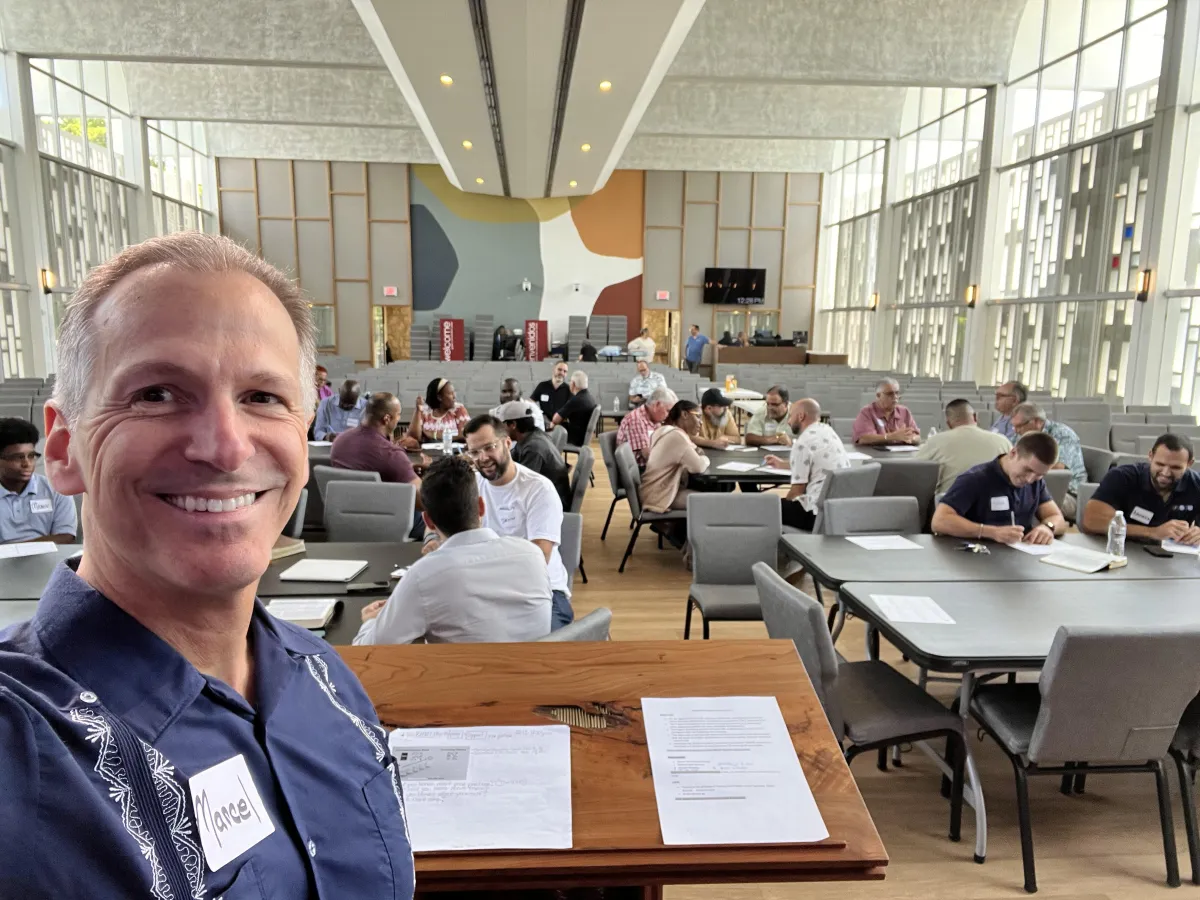
I've helped many teams work through this issue. Pictured above is a coaching training that I delivered to leaders in Miami. I hope this article serves to give you greater clarity on your approach to what's possible now with your team.
The Scope of the Problem Right Now
This is not a niche issue. According to Gallup's 2026 State of the Global Workplace report, only 20% of employees worldwide are currently engaged at work. That means roughly four out of every five people on teams around the world are either going through the motions or, in the case of 16%, actively working against the goals their leaders are trying to achieve. In the United States, that number sits at 31% engaged — the lowest Gallup has recorded in a decade.
Gallup also found that manager engagement dropped from 31% in 2022 to 22% in 2025. That's significant. Leaders are carrying more weight with less energy than they have had in years. And the standard playbook — more feedback, clearer expectations, stronger accountability — is not moving the needle the way it used to.
Something has shifted. And the leaders who are breaking through right now are the ones who have stopped relying solely on what they know and started getting better at helping their people find what they know.
What the Research Is Telling Us
Here are three principles grounded in peer-reviewed research and respected leadership scholarship that speak directly to how coaching skills change the conversation with underperforming team members.
Principle 1: Most Managers Think They Are Coaching. Most Are Not.
A study published in Harvard Business Review, conducted by Julia Milner and Trenton Milner of the International Centre for Leadership Coaching, asked 98 managers to coach a colleague on time management. What the researchers found was striking.
The skill managers struggled with most was not listening or giving feedback — it was "letting the coachee arrive at their own solution." Most defaulted immediately to advice-giving — handing over their answer rather than drawing one out.
The researchers concluded that "coaching is a skill that needs to be learned and honed over time" — and that without proper training, managers risk reinforcing ineffective habits across an entire organization.
The practical takeaway: what most leaders call coaching is actually consulting. Consulting says "here is what I think you should do."
Coaching asks "what do you think the right move is?"
The difference sounds small. The impact is enormous.
Principle 2: Ownership of the Solution Determines Whether It Lasts
There is a well-documented pattern in behavioral psychology and leadership development research: when a person arrives at their own answer, they commit to it at a significantly higher rate than when an answer is handed to them. This is sometimes called the IKEA Effect in behavioral economics — we value what we build ourselves more than what we receive.
In leadership terms, this means that the employee who tells you what they are going to do differently — because a conversation helped them work it through — is far more likely to actually do it than the employee who was told what to do and simply agreed.
Research cited in Harvard Business Review confirms that coaching approaches can significantly improve struggling employee performance when applied thoughtfully and systematically, and that traditional performance improvement often fails because it addresses symptoms rather than the underlying causes of underperformance.
When you help someone find the answer rather than giving it to them, you are not being passive. You are being more effective.
Principle 3: Managers Account for 70% of the Variance in Team Engagement
Gallup's research shows that managers account for 70% of the variance in team-level engagement. That is a significant number. It means that whether your team member is disengaged and underperforming is, more than any other single variable, a function of how you are leading them — not solely a reflection of who they are or what they are capable of.
This is not a critique. It is actually good news. Because it means the outcome is largely within your influence. The question is whether you have the skill set to exercise that influence in a way that builds people rather than creates dependency on you.
When managers are disengaged themselves, their influence does not disappear — it just runs in reverse. The same is true for the method: when leaders default to giving answers, that pattern runs through the team. When leaders start asking better questions, that pattern does too.
What This Looks Like in a Real Conversation
Let me put you in the chair for a moment.
You have a team member — let's call her Sarah. She is capable. You hired her because of it. But her performance on a key project has slipped over the past six weeks, and the conversations you have had have not produced a real change. You have told her what to do. She has agreed. And the pattern has continued.
Here is what the ICF coaching framework offers you in that moment — specifically the competency the International Coaching Federation calls Evoking Awareness, one of the core
Evoking Awareness means facilitating insight in the other person rather than delivering insight to them. The ICF describes it as asking questions that challenge the client's assumptions, using silence strategically, and reflecting back what you are hearing in a way that opens new thinking rather than closing it down.
In practice, a conversation with Sarah might shift from:
"I need you to be more proactive about communicating project status."
To:
"When you think about the last few weeks, what do you think has been getting in the way?"
And then, after she answers:
"What would it look like if that obstacle weren't there?"
Those two questions do something that a directive cannot. They invite Sarah into the problem. They communicate that you believe she has something real to offer — that you are not there to correct her, but to think alongside her. And when she arrives at an answer herself, she owns it in a way she never would have owned yours.
This is not therapy. This is not a lengthy coaching engagement. This is one conversation, led differently, that changes what happens next.
A Story That Illustrates the Shift
In May 2026, Harvard Business Review published a podcast episode with Dr. Melvin Smith, professor at the Weatherhead School of Management at Case Western Reserve University and co-author of Helping People Change: Coaching with Compassion for Lifelong Learning and Growth. The conversation focused directly on how to coach an employee who is struggling to perform.
Dr. Smith's central point: the biggest mistake leaders make is assuming that the conversation is about the performance gap. Often, the performance gap is a symptom. The real conversation is about what is going on underneath — and a leader who has coaching skills can get there. A leader without them is likely to stay at the surface, repeating the same feedback loop, wondering why nothing changes.
This is one of the most consistent things I hear from the leaders who come through our ICF-certified coach training at Imagine Coaching Academy. BJ, a national education consultant with 21 years of experience working with school districts and superintendents across the country, said it this way after completing the certification: "I realized I was always the one with the answer. I thought that was leadership. What I learned was that when I give someone the answer, I own it — they don't. And when they don't own it, it doesn't stick."
He is not alone in that realization. Gina, a QA Software Manager, said she noticed the change in conversations she was not even trying to coach — meetings, hallway check-ins, performance discussions. "I found myself asking better questions without even thinking about it. And the conversations just went differently."
Three Questions to Take Into Your Next Conversation
If you have a team member whose performance is a current concern, here are three coaching-informed questions you can bring into your next one-on-one — drawn directly from the ICF framework and grounded in the Evokes Awareness competency:
"When you look at the last few weeks, what do you think has been the biggest challenge for you?" This opens the conversation without assumption. It invites honesty rather than defense.
"If you could change one thing about how you are approaching this work, what would it be?" This question moves the person toward agency. It signals that you believe they are capable of identifying their own answer — which is more motivating than being told what to change.
"What would be most helpful from me right now — more direction, more space, or something else?" This one surprises most leaders. Asking what kind of support someone needs communicates respect. And the answer almost always gives you more useful information than another round of feedback would.
These are not magic phrases. They are a different orientation. And that orientation — staying curious, asking before telling, helping people find their own next step — is a skill set that can be developed, practiced, and refined.
What Formal Coaching Training Adds
Reading about coaching questions and using them consistently are two different things. The leaders who make the most lasting shift are the ones who do not just learn the concepts but practice them in a structured environment with real feedback — which is exactly what ICF-accredited coach training is designed to provide.
According to the 2025 ICF Global Coaching Study, more than 50% of coaching clients are now employer-sponsored, reflecting that organizations are increasingly recognizing coaching as a core component of leadership development strategy — not a perk, but a performance tool.
The ICF-certified executive coach credential gives you a globally recognized framework, a set of practiced competencies, and the confidence to lead differently in the conversations that matter most. For the leaders I work with — executives, business owners, ministry leaders, HR directors — the shift they describe is not just professional. It changes how they show up at home, in their communities, and in every relationship where they want to help someone grow.
If the question you are sitting with right now is "how do I lead team members who are not performing," the deeper question might be: "am I equipped with the right tools to have that conversation?" Leadership training that includes formal coaching skills is one of the most direct answers available to that question.
Closing Thought
The goal of a great leader has never been to have the best answers. The goal has always been to develop people who can find great answers for themselves.
That is the work. And there is a framework for it.
Your Next Step
I invite you to take two minutes and register for the free "Become an ICF Coach" Workshop, where I go deeper on the ICF certification and credentialing pathway, the coaching business roadmap, and what it looks like to build a practice, or pivot in your career, around your existing leadership experience.
Register Here: https://imaginecoachingacademy.com/live-webinar
Marcel Sanchez is the founder of Imagine Coaching Academy, an ICF Level 1 Accredited Coaching Education Provider. He is an ICF Professional Certified Coach with a mission to equip faith-based business and ministry leaders with the credential, competence, and confidence to lead at their highest level.
References
Gallup. "State of the Global Workplace 2026." Gallup, Inc.
https://www.gallup.com/workplace/349484/state-of-the-global-workplace.aspxMilner, Julia and Trenton Milner. "Most Managers Don't Know How to Coach People. But They Can Learn." Harvard Business Review, August 2018.
https://hbr.org/2018/08/most-managers-dont-know-how-to-coach-people-but-they-can-learnZest for Leadership Development. "A Different Viewpoint on Coaching Underperforming Teams." June 2025.
https://www.zestfor.com/resources/thought-leadership/leadership-management/coaching-underperforming-teams/Gallup. "State of the Global Workplace 2026." (second citation — managers account for 70% of team engagement variance)
https://www.gallup.com/workplace/349484/state-of-the-global-workplace.aspxSmith, Melvin. "How to Coach an Employee Who's Struggling to Perform." Harvard Business Review On Leadership podcast, July 2024.
https://hbr.org/podcast/2024/07/how-to-coach-an-employee-whos-struggling-to-performInternational Coaching Federation and PricewaterhouseCoopers. 2025 ICF Global Coaching Study Executive Summary. International Coaching Federation, 2025.
https://coachingfederation.org/resource/2025-icf-global-coaching-study-executive-summary/