Why Stepping Outside the 9-to-5 Builds Stronger Teams Than Any Meeting Ever Will
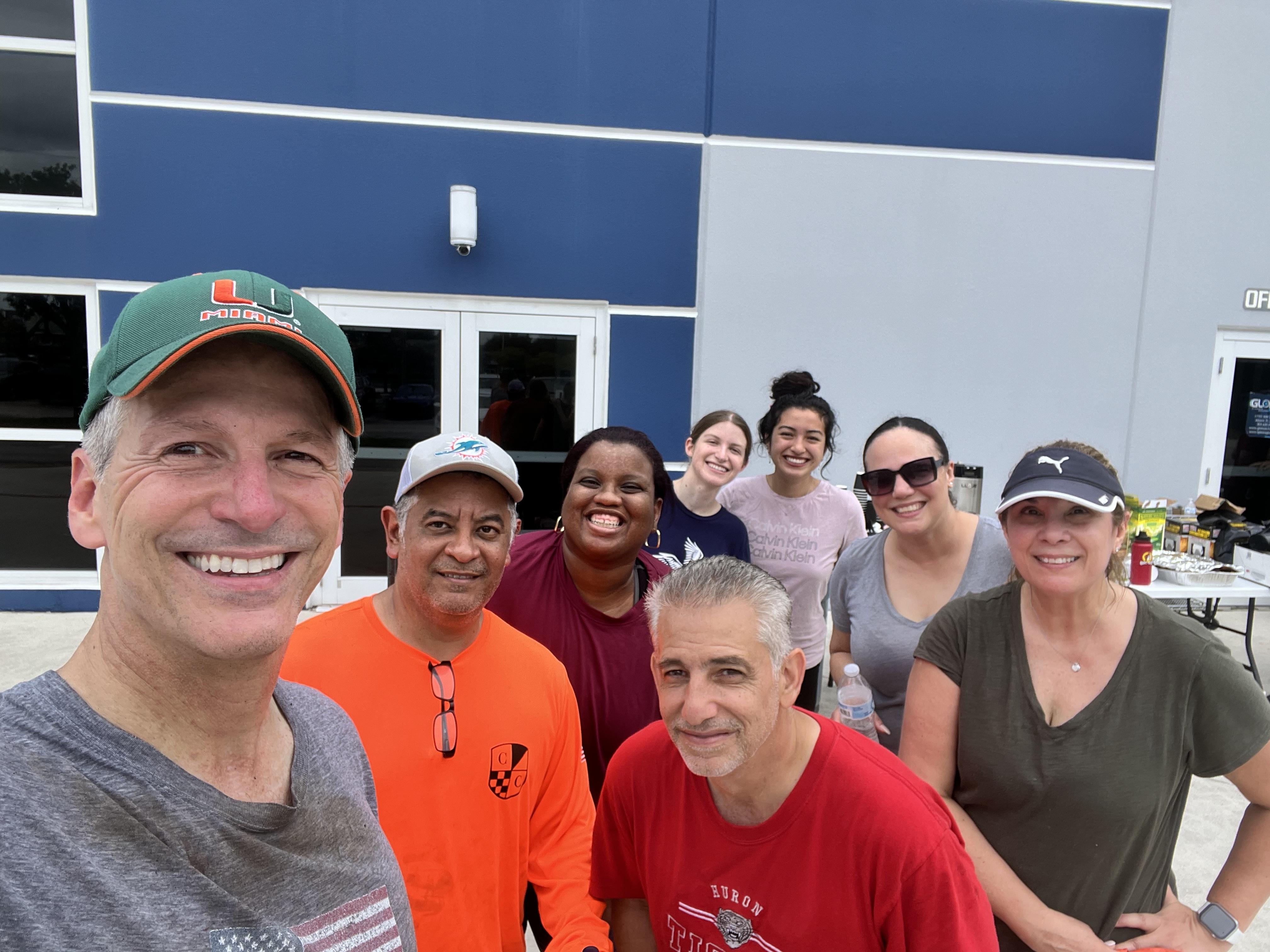
Earlier this morning, a group of us from a variety of ministry teams got together to do some landscaping work as one team. The picture in this post is from earlier this morning. We all got our hands dirty, working on something that had absolutely nothing to do with any of our normal job descriptions. Nobody was in their usual role. Nobody was running a meeting. We were just a group of people showing up to get something done together.
By the end of the morning, something had shifted. People who'd mostly known each other in passing were laughing together. People worked in areas that needed help even when it wasn't "their" area. There was a new level of respect, and I don't think that was an accident. I think it was the predictable result of what happens when a team steps outside its normal weekly environment and does something hard, together, side by side.
That experience is what prompted this post. Team building is often treated as a line item like an offsite or something else. But the research tells a more specific story about what actually builds trust and cohesion on a team, and it has very little to do with the kind of team building most companies default to. Let's review three respected principles behind why shared work outside the normal day-to-day builds teams that a thousand status meetings never will.
Principle 1: Moving in Sync, Literally, Builds Cooperation
This is one of the more fascinating findings in organizational psychology, and it comes from a landmark study published in Psychological Science by Stanford researcher Scott Wiltermuth and Chip Heath. Across three separate experiments, Wiltermuth and Heath found that people who physically moved in synchrony with others — walking in step, singing together, performing coordinated physical actions — cooperated significantly more in subsequent group tasks than people who performed the same actions out of sync. This held true even when cooperating required real personal sacrifice.
What's striking about the finding is the mechanism behind it. The researchers found that synchrony didn't need to produce warm, positive emotions to work — it built cooperation simply by strengthening people's sense that they were part of the same team. Acting in physical rhythm with other people, the study suggests, is one of the oldest and most reliable ways humans signal to each other, often unconsciously, "we are on the same side."
That finding has an obvious connection to work like landscaping, building, or any physical task done side by side. When a team is literally moving together — digging, hauling, lifting, placing — in a shared rhythm toward a shared outcome, something is happening below the level of conscious team-building strategy. The coordination itself is doing work that no icebreaker exercise can replicate, because icebreakers are designed to be talked about, while synchronized physical effort is simply experienced.
Why this matters for leaders: If you're looking for the highest-leverage version of a team day, prioritize activities that involve genuine physical coordination over activities that are purely conversational. A team hauling mulch together is, by this research, doing something structurally different — and more powerful — than a team sitting in a circle answering icebreaker questions.
It's worth noting what this research doesn't require. It doesn't require elaborate planning, a big budget, or a professional facilitator. Synchrony happens in ordinary physical labor — a group digging a trench together, carrying lumber in rhythm, passing materials down a line. The mechanism isn't novelty or expense. It's coordinated, embodied effort toward a shared goal, which is exactly what a landscaping project, a build day, or a community service project naturally produces without anyone needing to engineer it.
Principle 2: Crossing Role Lines Builds Mutual Respect That Hierarchy Can't
The second principle is about what happens when people step outside their defined roles and work alongside colleagues they don't normally interact with — especially across different levels of seniority or different departments.
Deloitte's long-running research on corporate volunteering, including its Volunteer IMPACT Survey, offers some of the most well-documented data available on this exact phenomenon. The research consistently finds that when employees work side by side on a shared, non-work task — often a volunteer project — it builds team cohesion and workplace relationships in a way ordinary office interaction doesn't.
Deloitte's research found that a strong majority of employees report that companies sponsoring these kinds of shared activities have a more cooperative, positive working atmosphere, and nearly half of employees who've participated say it directly helped them build connection with colleagues they wouldn't otherwise have worked alongside.
There's a simple reason this works, and it's one you probably felt firsthand this morning: a landscaping project doesn't care about org charts. The person who's best at digging a trench isn't necessarily the person with the highest title. When the task itself flattens the usual hierarchy, people get to see each other's competence, effort, and character outside the roles that normally define how they relate to one another. That's a different, deeper kind of information than most coworkers ever get about each other inside the walls of a normal workday.
Why this matters for leaders: The org chart is often the very thing limiting how well your team actually knows each other. Activities that intentionally cross role and department lines — where a VP and a new hire are doing the literal same task, shoulder to shoulder — tend to produce mutual respect that months of normal reporting-line interaction won't.
One of the most well-documented examples of this at scale is IBM's Corporate Service Corps, launched in 2008 and studied extensively, including in a Harvard Business School case written by Christopher Marquis and Rosabeth Moss Kanter. The program sends small teams of high-potential IBM employees — pulled from different countries, departments, and levels of seniority — to work side by side on pro bono consulting projects in emerging markets for several weeks at a time.
It was never framed primarily as a volunteering perk; IBM built it explicitly as a leadership development strategy, and research examining the program has concluded it became one of the most successful talent-development initiatives IBM ran in that era. Participants consistently reported meaningful gains in leadership skill and in their ability to work effectively across cultural and departmental lines — precisely the kind of cross-role trust that's hard to build inside a normal reporting structure, where title and tenure quietly shape every interaction.
IBM didn't need a bigger training budget to get this result. It needed to put people from different parts of the organization into a shared, unfamiliar task together and let the hierarchy fall away naturally.
Principle 3: Shared Challenge in an Unfamiliar Environment Accelerates Trust
The third principle is about what happens specifically when a team is taken out of its familiar environment and asked to solve something unfamiliar together. This is where some of the strongest controlled research exists.
A study published in Family Medicine and indexed on PubMed examined incoming medical residents at the University of Washington's Family Practice Residency Network. Two of the thirteen residency programs in the network included structured, outdoor-based experiential leadership training during intern orientation; the other eleven served as a comparison group with standard orientation.
Months later, researchers surveyed all the interns on trust, group awareness, problem-solving, and communication within their class. The results were clear: the group that went through the outdoor-based training scored higher across the board, with statistically significant differences on measures of trust, group effectiveness, and interpersonal communication — differences that held even though age and gender were comparable across both groups.
The researchers' conclusion is worth sitting with: experiential training outside a team's normal environment appeared to accelerate relationship-building that would otherwise have taken much longer to develop naturally — and it may have reduced stress during an already difficult transition by building those relationships faster. In other words, the unfamiliar environment wasn't an obstacle to overcome. It was the mechanism that made the trust-building happen faster than it would have inside a conference room.
This tracks with a broader body of research, too. A meta-analysis by organizational researchers Klein and colleagues, drawing on 60 separate effect sizes across team-building studies, found measurable support for team-building interventions improving team outcomes — but the research consistently points to activities with genuine shared challenge, not passive bonding exercises, as the stronger lever.
Separate meta-analytic research on structured team debriefs following shared activities found those debriefs alone can improve subsequent team performance by 20 to 25%, which suggests the conversation after a shared challenge matters almost as much as the challenge itself — a point worth remembering before you rush straight back to the next task.
Why this matters for leaders: If your team has never done anything hard together outside their normal environment, you likely have an underdeveloped trust reserve that a few well-run meetings can't fix. A shared challenge — physical, unfamiliar, slightly outside everyone's comfort zone — appears to build that trust reserve faster than almost anything that happens at a desk. And the research on debriefs suggests the follow-up conversation is worth the extra ten minutes: ask your team what they noticed about each other, not just what got accomplished.
Why This Matters More in a Hybrid Workplace
This research isn't new, but it's more urgent now than it's been in years. SurveyMonkey's 2026 workplace research found that nearly half of workers — 46% — say they're concerned about missing out on building relationships with coworkers because of hybrid work arrangements.
Gallup's 2025 State of the Global Workplace report found loneliness runs highest among fully remote employees at 27%, drops to 23% for hybrid workers, and is lowest among on-site employees — a clear gradient showing that physical presence and shared activity still matter, even in a workplace that's otherwise gone digital.
That's the quiet cost hiding inside convenient, screen-based collaboration: teams can hit every deliverable and still barely know each other. The three principles above — synchronized physical effort, crossed role lines, and shared unfamiliar challenge — all share one requirement hybrid and remote work structurally struggle to provide: physical co-presence.
A Slack thread can coordinate a project. It can't replicate what happens when a team is standing in the same yard, passing the same tools, solving the same unexpected problem together. If your organization has drifted toward fewer in-person touchpoints, this is exactly the kind of gap a single, well-designed shared workday can start to close.
What Happened on Our Team This Morning
I didn't walk into this morning's landscaping project thinking about synchrony research or Deloitte's volunteer data. I walked in because there was work that needed to be done and people were willing to show up for it. But looking back at it through this research, I can see exactly why the day worked the way it did.
We were moving together, physically, toward a shared outcome. We were working outside our normal roles, shoulder to shoulder, with people we don't always interact with day to day. And we were doing something slightly unfamiliar, in an environment outside our usual nine-to-five.
That combination is rare in most workplaces, and it's exactly why the respect in the room was different by the end of the morning than it was at the start. Nobody manufactured that. It was earned, in real time, through shared effort.
What strikes me most, looking back, is how little it actually took. No consultant designed the morning. No budget line was approved for "team cohesion." A handful of people showed up with tools, worked alongside each other on something that needed doing, and left closer than they arrived.
That's the part worth remembering before assuming team building requires a big offsite budget or a professional facilitator — the research above suggests the ingredients are much simpler and much more accessible than most organizations assume. Shared physical effort. Crossed role lines. A task slightly outside the normal routine. That's a remarkably short list for something with this much research behind it.
Questions for Your Team to Reflect On
None of the research above requires a large budget, a consultant, or a multi-day retreat. It requires intention — a willingness to deliberately build moments where your team moves together, crosses its usual role lines, and takes on something slightly unfamiliar. If this resonates, here are a few questions worth sitting with, either on your own as a leader or directly with your team:
When was the last time your team did something physically challenging together, outside of normal work tasks?
Are there people on your team, across different levels or departments, who have genuinely never worked side by side on anything?
What would it look like to deliberately flatten the hierarchy for a single day — where title has no bearing on who's doing what?
Is your current approach to "team building" mostly conversational (icebreakers, happy hours), or does it involve genuine shared effort and coordination?
What's one unfamiliar environment or challenge your team could take on together this quarter — something slightly outside everyone's comfort zone?
After your last team event, did people walk away with new respect for each other, or just a pleasant memory? What's the difference, and which one are you actually building toward?
The research is consistent on this point: trust and respect on a team aren't primarily built through talking about teamwork. They're built through doing something hard, together, outside the roles and routines that usually define how a team relates to one another. If you lead a team and you're looking for your next move, it might not be another meeting, another survey, or another slide deck on culture. It might be a Saturday morning, a project that needs doing, and a willingness to show up and get your hands dirty alongside the people you lead.
What's one thing you can start doing differently to prepare your team this week, to work better together?
What will it cost you not to be prepared for your next role?
Are you considering a new role in the next 6-24 months? If so, how are you preparing for this next role before your leadership gaps get exposed? Register for the free Certified Coach Accelerator Workshop, where I go deeper on the ICF certification and credentialing pathway, the coaching business roadmap, and what it looks like to build a practice, or pivot in your career, around your existing leadership experience.
Register Here: https://imaginecoachingacademy.com/live-webinar
Marcel Sanchez is the founder of Imagine Coaching Academy, an ICF Level 1 Accredited Coaching Education Provider. He is an ICF Professional Certified Coach with a mission to equip faith-based business and ministry leaders with the credential, competence, and confidence to lead at their highest level.
References
Wiltermuth, S. S., & Heath, C. (2009). "Synchrony and Cooperation." Psychological Science, 20(1), 1–5. https://doi.org/10.1111/j.1467-9280.2008.02253.x
Deloitte Volunteer IMPACT Survey and related Deloitte Volunteerism research, summarized in "How Volunteerism Drives Employee Engagement," United Way of Greater Charlotte — https://unitedwaygreaterclt.org/blog/get-involved/how-volunteerism-drives-employee-engagement/
Marquis, C., & Kanter, R. M. "IBM: The Corporate Service Corps," Harvard Business School Case Collection, summarized in "IBM: The Corporate Service Corps," ResearchGate — https://www.researchgate.net/publication/228138522_IBM_The_corporate_service_corps
"Outdoor-Based Leadership Training and Group Development of Family Practice Interns," Family Medicine, via PubMed — https://pubmed.ncbi.nlm.nih.gov/9232407/
Klein, C., et al. (2009). Meta-analysis on team-building interventions, and Tannenbaum & Cerasoli research on team debrief effectiveness, cited in "Team Development Interventions," American Psychologist manuscript — https://psycnet.apa.org/manuscript/2018-23205-017.pdf
SurveyMonkey, "Remote and Hybrid Work Statistics and Trends, 2026" — https://www.surveymonkey.com/learn/employee-feedback/remote-hybrid-work-statistics/
Gallup, "State of the Global Workplace 2025," cited in "Workplace Loneliness Statistics 2026," Makerstations — https://www.makerstations.io/workplace-loneliness-statistics/


