What My Nephew's Jiu-Jitsu Match Taught Me About the Art of Coaching
What My Nephew's Jiu-Jitsu Match Taught Me About the Art of Coaching
I didn't expect to leave a Brazilian Jiu-Jitsu gym thinking about coaching competencies.
But that's exactly what happened last week.
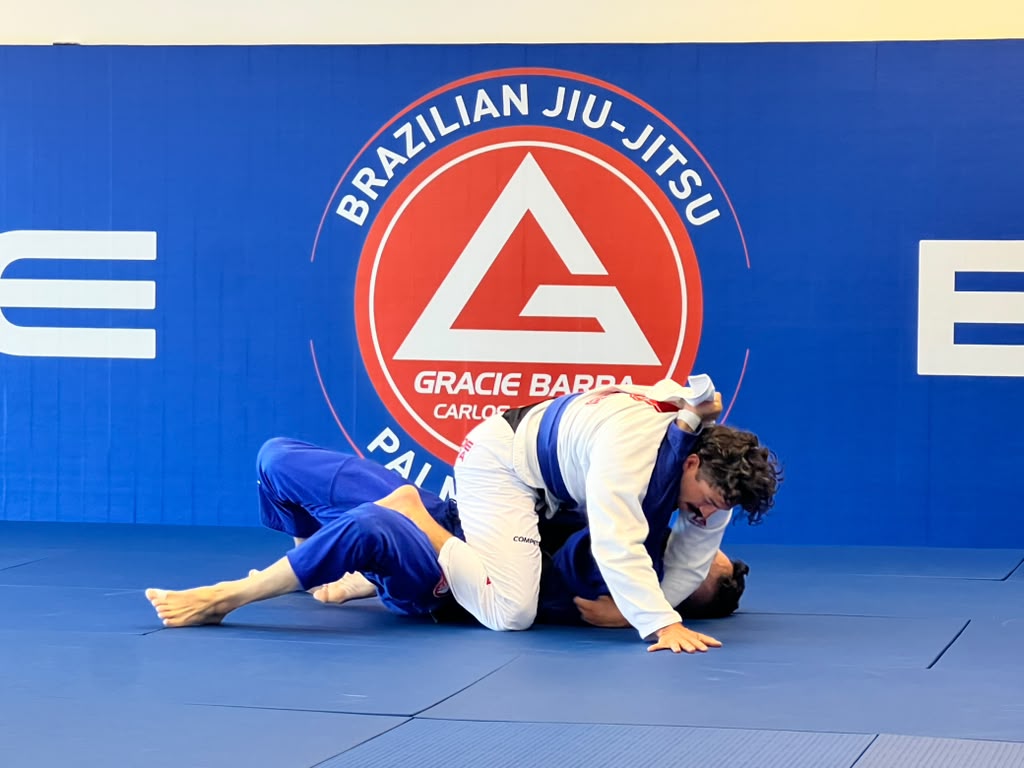
I watched my nephew Jordan participate in his weekly class. Jordan is the guy in the picture hovering over his teacher. The warm-up alone lasted twenty minutes — deliberate, disciplined, unhurried. Then the gym owner invited Jordan to a fifteen-minute practice match. What followed stopped me cold.
I'm not a Jiu-Jitsu practitioner. I don't know the names of the techniques or the scoring system. But I know leadership. I know coaching. And what I watched on that mat for fifteen minutes was one of the most vivid illustrations of the ICF coaching framework I have ever seen — not in a training room, not in a textbook, but in a gym, between a young man and his instructor.
Let me tell you what I saw.
The Match Doesn't Start When the Match Starts
Before Jordan and the gym owner ever made contact, something was already happening.
They were reading each other. Circling. Watching posture, weight distribution, breath. Neither one was reacting yet — they were listening. Not with their ears, but with their entire presence.
In the ICF Core Competency framework, this is called Active Listening — and it is the foundation of everything that follows. The ICF defines it as the ability to focus completely on what the client is and is not saying, to understand the meaning of what is said in the context of their desires, and to support self-expression.
What strikes me about Jiu-Jitsu is that you cannot fake this. If you stop truly paying attention — even for a fraction of a second — your opponent finds the gap. The mat doesn't forgive distraction.
Neither does a coaching session.
The moments when we stop truly listening — when we begin formulating our next question while the client is still speaking, when we assume we already know where they're going — are the moments we lose the thread. We stop serving the person in front of us and start serving our own agenda.
Jordan's match reminded me: full presence is not a technique. It is a discipline. It must be practiced, week after week, until it becomes instinct.
Strategy Is Not a Script
What amazed me most about watching Jordan was the absence of panic.
Jordan was tested. His teacher and gym owner — clearly more experienced — created pressure, shifted positions, changed the rhythm of the match. And Jordan didn't freeze. He didn't force a move he had memorized. He adapted. He read what was in front of him and responded to what was actually happening, not to what he had prepared for.
This is Strategic Thinking in its purest form — one of the qualities that immediately struck me as I watched the match unfold.
In coaching, we call the equivalent competency Evokes Awareness. The ICF describes it as the ability to facilitate client insight and learning by using tools and techniques such as powerful questioning, silence, metaphor, or analogy. The key word is facilitate — not engineer. Not force. Not script.
The greatest coaching sessions I have led were not the ones where I knew exactly what question was coming next. They were the ones where I was present enough to hear something in what my client said — a hesitation, a word they kept returning to, an energy shift — and follow it.
Strategy in coaching is not a battle plan. It is the capacity to remain clear about the goal while staying completely flexible about the path. Jordan didn't change where he was trying to go. He changed how he was getting there, in real time, based on what the match was showing him.
That is elite coaching. And elite leadership.
Patience Is Not Passive
Here is what I did not expect to feel watching a Jiu-Jitsu match: stillness.
There were long moments — five, ten, fifteen seconds — where almost nothing appeared to be happening. Two people, locked in position, not moving. A casual observer might have thought they were resting.
They were not resting.
They were waiting. Sensing. Holding their ground without forcing the moment. Trusting that the right opening would come — and that forcing one prematurely would cost them more than patience would.
I have sat with clients in moments like this. Moments of silence that feel, to an inexperienced coach, like failure. I should say something. I should fill this. Something has gone wrong.
Nothing has gone wrong. Everything is working.
The ICF competency of Maintains Presence asks coaches to remain confident and flexible during moments of uncertainty. It asks us to be comfortable not knowing — to trust the process, the client, and the space between words.
Patience in coaching is not passive waiting. It is active trust. It is the belief that the client is capable of finding their own answer — and that your silence is sometimes the most powerful contribution you can make to the conversation.
Jordan taught me this on a mat in a gym. He didn't force the match. He let the match reveal itself.
Collaboration Changes Everything
This is the part that surprised me most.
I expected competition. Two people trying to win. I expected the gym owner — clearly the more skilled practitioner — to dominate, to demonstrate, to show Jordan what mastery looks like from the outside.
That is not what happened.
What I watched was closer to a conversation than a contest. The gym owner was creating conditions for Jordan to grow — challenging him, yes, but never overwhelming him. Pushing him to the edge of his ability without pushing him past it. Meeting him exactly where he was, and inviting him — through the match itself — to go one step further.
This is Co-Creating the Relationship, the ICF competency cluster that encompasses trust, safety, and genuine partnership. The ICF defines coaching as a partnership — not a service transaction, not an expert delivering wisdom to a novice, but two people working together toward the client's goals.
The gym owner could have physically overwhelmed Jordan in sixty seconds. He didn't. Because that wasn't the point. The point was Jordan's growth — and growth requires collaboration, not domination.
I think about this every time I sit across from a leader who has spent decades being the most capable person in the room. The shift from expert to collaborative partner is one of the hardest transitions in coaching. It requires setting aside the need to demonstrate your own knowledge and committing fully to the other person's discovery.
The gym owner modeled this beautifully. He was not there to show Jordan what he knew. He was there to show Jordan what Jordan was capable of.
Strength Is Not Force
The final quality I observed — and perhaps the one that lingered longest — was strength.
Not physical strength, though that was present. I mean something else. The kind of strength that holds ground without rigidity. That applies pressure without cruelty. That challenges without crushing.
In ICF terms, this maps most closely to Direct Communication — the competency that asks coaches to be clear, articulate, and direct without being harsh. To name what is true even when it is uncomfortable. To hold the client accountable to their own stated goals without rescuing them from the discomfort of growth.
The gym owner didn't soften the match to spare Jordan's feelings. He brought real challenge. And Jordan rose to meet it — not because he was forced to, but because the challenge was calibrated exactly to his capacity and delivered in an environment of complete trust.
This is what direct communication looks like in a coaching context. It is not bluntness for its own sake. It is the courage to say the true thing, at the right moment, in a way the client can actually receive.
Strength in coaching is not dominance. It is the quiet confidence to hold the space steady — even when the client is uncomfortable, even when the conversation is hard — because you trust that the discomfort is producing something worth having.
What the Mat Teaches the Coach
I left that gym with more than I came in with.
I came as an uncle watching my nephew. I left as a coach who had just watched fifteen minutes of some of the most sophisticated human development work I have ever seen — delivered without a single word of instruction, in the middle of a practice match, by a gym owner who understood intuitively what it means to walk alongside someone toward their own breakthrough.
Active Listening. Strategic Thinking. Patience. Collaboration. Strength.
These are not just Jiu-Jitsu qualities. They are coaching competencies. They are leadership qualities. And they are — at their core — human qualities that every leader who works with people needs to develop, practice, and refine.
Jordan will go back to that gym next week. He will warm up for twenty minutes. He will be invited to another match. And he will be slightly better than he was this week — not because someone told him what to do, but because someone created the conditions for him to discover it himself.
That is coaching. That is what we do at Imagine Coaching Academy.
And I am grateful that a fifteen-minute practice match in a Brazilian Jiu-Jitsu gym reminded me why it matters.
Marcel Sanchez is the founder of Imagine Coaching Academy, an ICF Level 1 Accredited Coaching Education Provider. He is an ICF Professional Certified Coach with a mission to equip faith-based business and ministry leaders with the credential, competence, and confidence to lead at their highest level.
Your Next Step
I invite you to take two minutes and register for the free "Become an ICF Coach" Workshop, where I go deeper on the ICF certification and credentialing pathway, the coaching business roadmap, and what it looks like to build a practice, or pivot in your career, around your existing leadership experience.
Register Here: https://linksi.me/ggvJs