The Coaching Paradox: Why Being "Nice" Is Failing Your Team
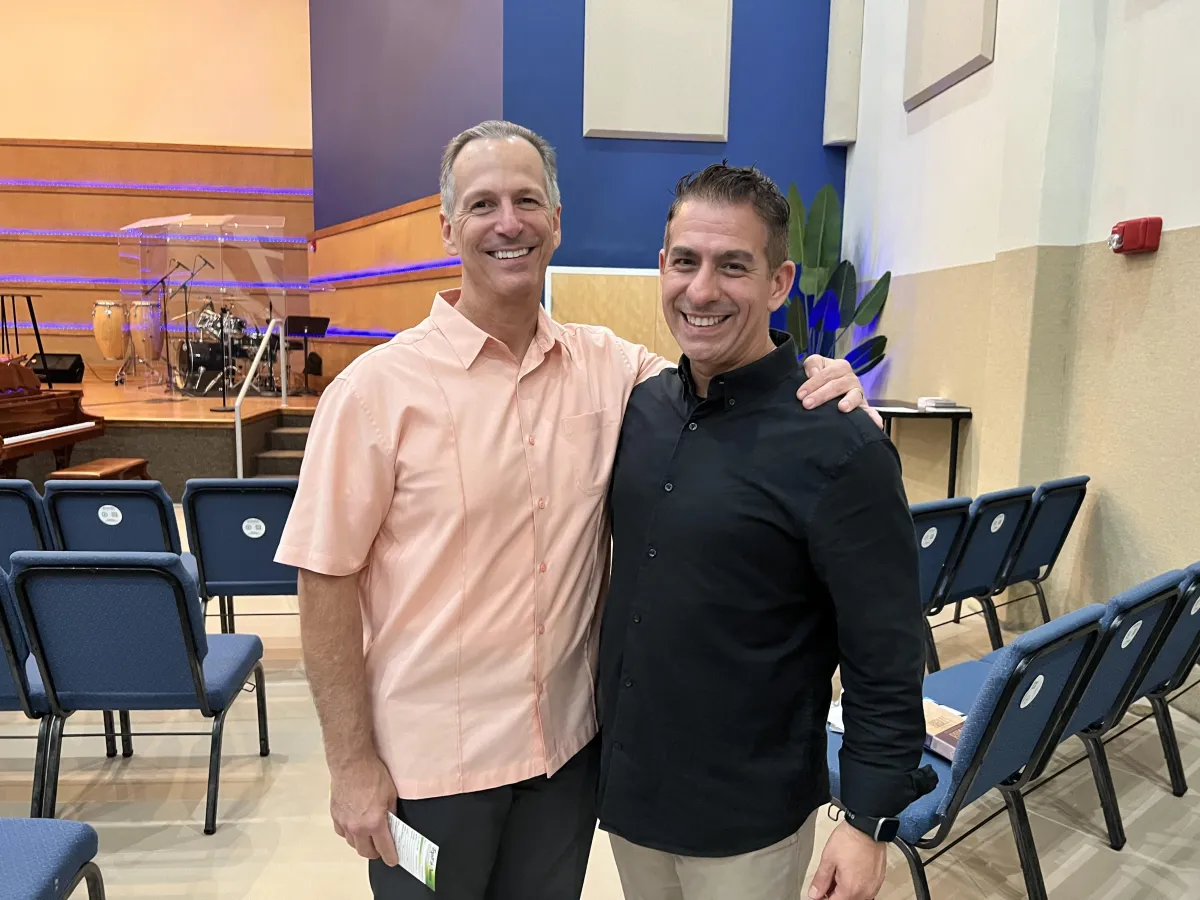
A few weeks ago, Pastor David Lopez spoke at our church. If you've ever been in a room with David, you know exactly what I mean when I say he doesn't dance around a point. He says what's true, clearly, and he says it because he cares about the people hearing it. I've gotten to know David better this year, and what's struck me most isn't just how directly he speaks — it's how effectively he leads teams because of it, not in spite of it. In a few weeks he's leading a workshop on protecting your future and your family, and I have no doubt it'll carry that same quality: honest, unflinching, and genuinely for the people in the room.
Watching David operate this year has crystallized something I've been circling for a while: a lot of leaders confuse being nice with being kind, and it's quietly costing their teams.
The Paradox
Here's the paradox. Most of us were taught that good leadership means being supportive, encouraging, easy to work with. So we soften the feedback. We hint instead of state. We let the underperformance slide "just this once" because we don't want to be the bad guy. It feels kind in the moment. But over months and years, it isn't kindness — it's an avoidance that leaves people stuck exactly where they are, unable to grow because no one ever told them the truth clearly enough to act on it.
Real care and real challenge aren't opposites. The leaders who make the biggest difference in people's lives — like David, and I'd guess like someone in your own life — are the ones who hold both at once.
Three Principles Behind Direct Leadership
1. Kindness Isn't the Absence of Challenge
Author and former Google/Apple executive Kim Scott built an entire leadership framework around this exact tension. Her research and years of coaching leaders led her to a simple model: leadership feedback lives on two axes, caring personally and challenging directly. When leaders care but don't challenge, Scott calls it "Ruinous Empathy" — the well-meaning silence that feels kind but quietly limits a person's growth. The goal, and the hardest place to stand, is the intersection of both: what she calls Radical Candor.
This tracks with what David models. He challenges people because he's already made clear he's for them. The directness only works because the care came first.
Scripture echoes this exact tension. "Better is open rebuke than hidden love. Faithful are the wounds of a friend" (Proverbs 27:5-6, ESV). Scripture doesn't treat honest correction as the opposite of love — it treats hidden, unspoken "love" as the lesser thing, and a friend's honest wound as the greater act of faithfulness.
In ICF coaching terms, this shows up as the pairing of Competency 4, Cultivates Trust and Safety, with Competency 7, Evokes Awareness — specifically the marker that a coach "challenges the client as a way to evoke awareness or insight." Trust isn't the alternative to challenge in the ICF model. It's the foundation that makes challenge land as care instead of criticism.
2. Silence Has a Real, Measurable Cost
It's tempting to think withholding hard feedback is the "safe" choice. Research says otherwise. Harvard Business School professor Francesca Gino and her colleagues ran a series of experiments and found that most people avoid giving even low-cost, clearly constructive feedback to someone right in front of them — consistently overestimating how badly the feedback would land and underestimating how much the other person would actually value it. That misjudgment held even between people who knew each other well.
Separately, a large-scale survey run by leadership researchers Jack Zenger and Joseph Folkman and published in Harvard Business Review found that 44% of nearly 7,600 managers said giving negative feedback felt stressful or difficult — stressful enough that many simply avoid it.
Do you avoid giving negative feedback to your team?
What has that cost you?
What else has that avoidance cost you?
The gap between what a team needs to hear and what a leader is willing to say isn't neutral. It's a decision, and it has a cost, even when it doesn't feel like one in the moment.
Proverbs makes the same case in blunter terms: "Whoever rebukes a man will afterward find more favor than he who flatters with his tongue" (Proverbs 28:23, ESV). The short-term discomfort of honesty outlasts the short-term comfort of flattery.
In ICF terms, this is Evokes Awareness marker 7.5 and 7.6 in action: the coach "shares — with no attachment — observations, intuitions, comments, thoughts or feelings" and "asks clear, direct, primarily open-ended questions." Clarity isn't a personality trait in coaching. It's a trained, deliberate skill.
3. Directness Without Care Backfires Just as Badly
None of this is a license to be blunt for bluntness's sake. Research published in the Academy of Management Perspectives found that managers tend to fail their teams in one of two opposite ways: either they're so supportive that they avoid ever giving negative feedback, or they're so intolerant of failure that people stop bringing them problems at all. Both patterns break the same thing — an honest, ongoing exchange between a leader and their team about what's actually working.
David's directness never reads as harsh, because it's never separated from genuine care for the person in front of him. That combination is the entire point.
Paul makes this the standard for mature communication: "Speaking the truth in love, we are to grow up in every way into him" (Ephesians 4:15, ESV). Truth and love aren't presented as a balance to manage — they're presented as a single act. Truth without love is just criticism. Love without truth is just silence.
In ICF terms, this is why Cultivates Trust and Safety markers 4.2 and 4.3 — showing support, empathy, and concern, and acknowledging the client's expression of feelings and concerns — sit right alongside the "challenge" markers in Evokes Awareness. A credentialed coach is never assessed on directness alone. It's always directness held together with genuine care for the person on the other side of the conversation.
What Does This Mean for Your Leadership Team?
Make feedback a weekly rhythm, not an annual event. Gallup's research on workplace feedback found that only 28% of employees receive feedback a few times a year, and 19% get it once a year or less. That's the equivalent of trying to correct a ship's course with one adjustment instead of dozens of small ones. Netflix built its entire performance culture around the opposite approach — it dropped the formal annual review altogether in favor of continuous, informal feedback using a simple "Start, Stop, Continue" structure in regular check-ins. You don't need Netflix's intensity to borrow the habit: pick one weekly touchpoint with each direct report and use it to name one thing to start, one to stop, and one to continue.
Structure hard conversations so they land as fact, not judgment. The Center for Creative Leadership's Situation-Behavior-Impact (SBI) model gives leaders a simple, repeatable way to deliver direct feedback without it feeling like a personal attack: name the specific situation, describe the observable behavior, then explain its impact. "You were dismissive in that meeting" invites an argument about character. "When you moved to the next agenda item right after I raised a concern, it left me unsure whether the concern had been heard" gives the person something concrete to respond to. Try writing out your next piece of tough feedback in that three-part structure before you deliver it.
Say it to their face, not around it. One of Netflix's clearest cultural norms is deceptively simple: only say about someone what you would say to them directly. Gossip and side-channel complaints are a slower, more corrosive version of Ruinous Empathy — the concern gets voiced, just never to the person who could act on it. As a leader, the fastest way to build this norm on your team is to model it visibly: when someone brings you a concern about a colleague, your first question should be, "Have you talked to them about this yet?"
Name the care before you deliver the challenge. Because directness without context can land as an attack, make the "I'm for you" part of the conversation explicit rather than assumed. A single sentence — "I'm telling you this because I want to see you succeed here" — does real work before the harder part of the conversation begins. It's a small habit, but it's the difference between feedback that feels like an ambush and feedback that feels like an investment.
Pick one conversation you've been avoiding, and have it this week. Every principle above is only theoretical until it's applied to an actual person and an actual conversation. Most leaders already know which conversation they've been putting off. The research is consistent on one point: the cost of that silence compounds the longer it's delayed, while the relationship usually survives the honesty better than leaders expect going in.
The Takeaway
Being nice and being kind are not the same thing. Nice avoids the hard conversation to protect comfort. Kind has the hard conversation to protect the person's growth. Watching leaders like David Lopez this year has been a good reminder that the most respected leaders I know aren't the ones who never say the hard thing — they're the ones who've earned the trust to say it, and say it anyway.
If you lead a team, the question worth sitting with this week isn't "Am I being nice enough?" It's "Am I being honest enough to actually help them grow?"
What's one thing you can start doing differently to grow your character this week?
What will it cost you not to be prepared for your next role?
Are you considering a new role in the next 6-24 months? If so, how are you preparing for this next role before your leadership gaps get exposed? Register for the free Certified Coach Accelerator Workshop, where I go deeper on the ICF certification and credentialing pathway, the coaching business roadmap, and what it looks like to build a practice, or pivot in your career, around your existing leadership experience.
Register Here: https://imaginecoachingacademy.com/live-webinar
Marcel Sanchez is the founder of Imagine Coaching Academy, an ICF Level 1 Accredited Coaching Education Provider. He is an ICF Professional Certified Coach with a mission to equip faith-based business and ministry leaders with the credential, competence, and confidence to lead at their highest level.
References
Scott, K. Radical Candor: Be a Kick-Ass Boss Without Losing Your Humanity. Framework summarized in "Kim Scott – Fostering Collaboration through Radical Candor," Nordic Business Forum — https://www.nbforum.com/newsroom/blog/kim-scott-fostering-collaboration-through-radical-candor/
Gino, F., Abi-Esber, N., Abel, J., & Schroeder, J. Research summarized in "Why People Crave Feedback—and Why We're Afraid to Give It," Harvard Business School Working Knowledge — https://www.library.hbs.edu/working-knowledge/why-people-crave-feedback-and-were-afraid-to-give-it
Zenger, J. & Folkman, J. "Why Do So Many Managers Avoid Giving Praise?" Harvard Business Review — https://hbr.org/2017/05/why-do-so-many-managers-avoid-giving-praise
"Are Your Employees Avoiding You? Managerial Strategies for Closing the Feedback Gap," Academy of Management Perspectives — https://journals.aom.org/doi/abs/10.5465/ame.2004.12691168
Gallup research on feedback frequency, cited in "The Situation-Behavior-Impact™ Feedback Tool," MindTools — https://www.mindtools.com/ay86376/the-situation-behavior-impact-feedback-tool/
Center for Creative Leadership, "Use SBI (Situation-Behavior-Impact) to Inquire About Intent" — https://www.ccl.org/articles/leading-effectively-articles/closing-the-gap-between-intent-vs-impact-sbii/
Netflix Culture Memo, on continuous feedback and "Start, Stop, Continue" — https://jobs.netflix.com/culture
ICF Core Competencies & PCC Markers
International Coaching Federation, Core Competency 4: Cultivates Trust and Safety — https://www.strengthsnavigator.com/icf-c4
International Coaching Federation, Core Competency 7: Evokes Awareness (Markers 7.2, 7.5, 7.6) — https://www.strengthsnavigator.com/icf-c7
Scripture (ESV)
Proverbs 27:5–6
Proverbs 28:23
Ephesians 4:15