Presence Wins Clients: How to Find, Nurture, and Win Leads Through Intentional Networking
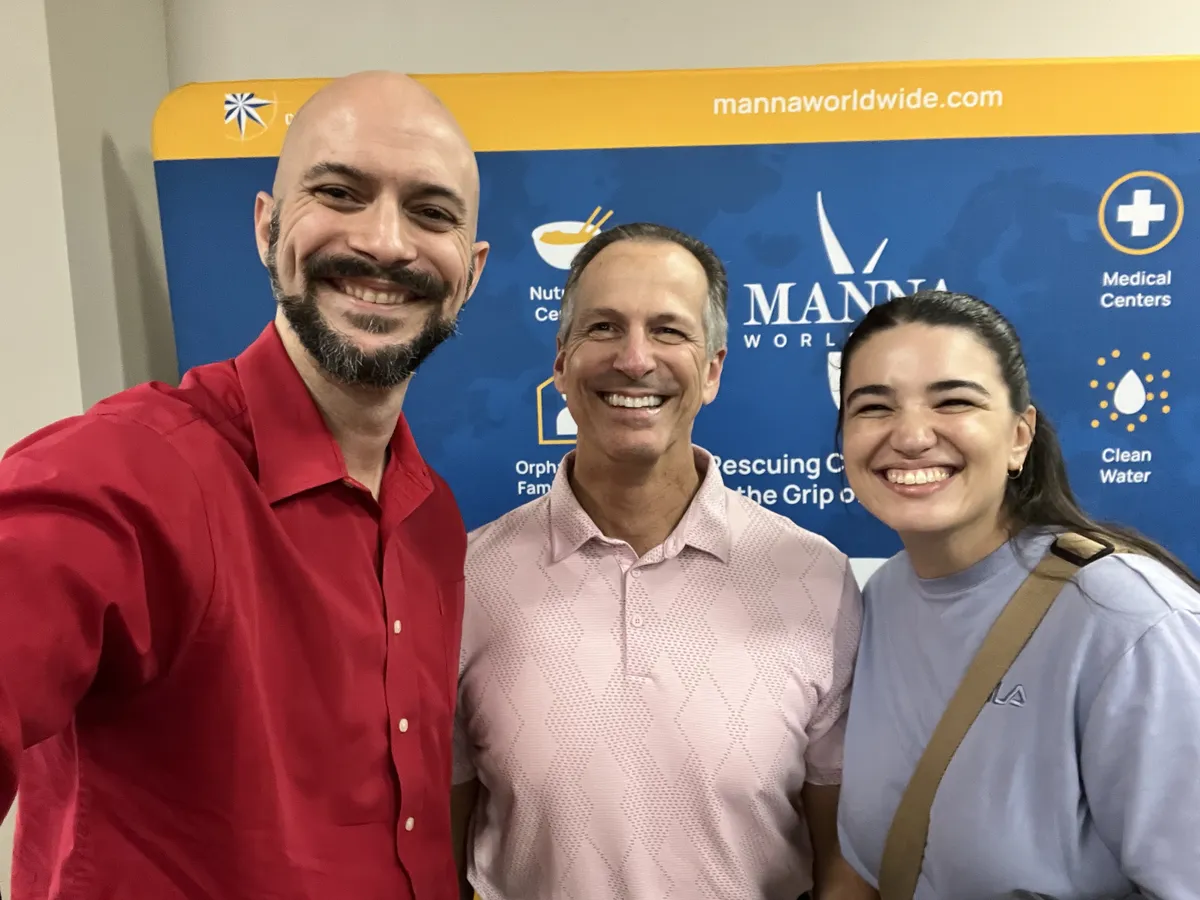
Recently my daughter and I had the chance to connect with a great leader named Cory Lyons at a national meeting. We walked away from that conversation with a reminder of something every business owner and sales leader knows in theory but rarely practices well: presence is one of the most effective strategies for winning new clients.
Cory and his team are some of the most creative networkers I've ever watched in action. They attended the conference alongside their leader, and they didn't treat the event as a three-day window. They connected with new leads before the conference started, during the sessions and hallway conversations, and after everyone had attended the final session.
At one point, his team even met with prospects over breakfast at a different hotel than the one where they were staying. They went to where the prospects were, on the prospects' terms, because the relationship mattered more than their own convenience.
Creative. Intentional. Honestly, a little inspiring.
It made me wonder what the research actually says about why that approach works. Is it just personality, or is there a repeatable networking strategy underneath it? The answer, it turns out, is well documented. Cory's team was applying three principles that show up again and again in the research on lead generation, relationship building, and B2B sales: show up where your leads are, follow up faster than feels necessary, and be fully present at the moments that matter. Let's walk through each one, with the evidence behind it, so you can build your own version.
Principle 1: Find Leads by Showing Up Where They Already Are
The first stage of any networking strategy is simply finding new people to talk to, and the research on how opportunity actually travels through professional networks is more surprising than most people expect.
In 1973, sociologist Mark Granovetter published a landmark paper called "The Strength of Weak Ties." He studied professionals who had changed jobs and found that more than half had found their new role through a personal contact. The twist was who those contacts were. Of the people who found work that way, 84 percent said the contact was someone they saw only occasionally or rarely. In other words, the most valuable people in a network are often acquaintances, not close friends, because acquaintances move in different circles and carry information you don't already have.
For decades that finding was based on correlation. Then a large-scale study involving more than 20 million LinkedIn users over five years, conducted by researchers from LinkedIn, Harvard Business School, Stanford, and MIT, tested it with real experiments. The results gave causal evidence for Granovetter's idea: moderately weak ties, meaning acquaintances who share a handful of mutual connections with you and interact with you rarely, were more than twice as effective as strong ties at helping people land new opportunities.
The researchers also found the effect varied by industry, so it isn't a universal rule. Even so, the lesson for anyone doing business development is clear. Your next best lead probably isn't sitting in your inner circle. It's a few steps outside it.
That's exactly what a national conference is built for. Hundreds of professionals, many of whom you'd never meet in your normal week, all gathered in one place and all open to conversation. Cory's team understood that the event itself wasn't the goal. The event was an opportunity to convert weak ties into real relationships. A few ways to apply this:
Start before you arrive. Review the attendee list, speaker roster, or event app ahead of time. Reach out to a handful of people and suggest a short meeting. A conference calendar that's half-full before you land is a very different experience than one you fill with chance encounters.
Go where the conversations are. Hallways, receptions, meals, and coffee lines produce more genuine conversations than most sessions do. Cory's team taking a breakfast meeting at a different hotel is the extreme version of this: if the prospect's morning is in a different place, so is your morning.
Prioritize variety. Because the research shows acquaintances from different circles carry the freshest opportunities, make a point to talk with people outside your industry or role, not just the ones who look like your ideal customer on paper.
Ask more than you tell. The goal of a first conversation is to learn who the person is, what they're working on, and where they're stuck. You can't find a good-fit lead by pitching to everyone who walks by.
Principle 2: Nurture Leads by Following Up Faster Than Feels Natural
Finding a lead is only the first step. What happens next determines whether the conversation ever becomes a client. Here the research is unusually clear, and it's the part of the process where most organizations quietly lose the most business.
Harvard Business Review published a widely cited study called "The Short Life of Online Sales Leads," by James Oldroyd, Kristina McElheran, and David Elkington. The researchers examined 1.25 million sales leads received by 29 business-to-consumer and 13 business-to-business companies in the United States. Two findings stand out.
First, among the companies that responded at all within 30 days, the average response time was 42 hours. Second, speed made an enormous difference: contacting a lead within an hour made a company nearly seven times more likely to qualify that lead than waiting even one more hour, and many times more likely than waiting a day.
To be fair and precise, that study focused on online leads, people who had submitted an inquiry through a website, not people you met over coffee at a conference. But the underlying principle is hard to dismiss. Interest fades quickly, attention shifts to the next thing, and the first company to show up in a meaningful way gets a huge advantage. If you meet someone on Tuesday and follow up the next Monday, you've waited long enough for the memory of the conversation to cool.
This is the "after" part of Cory's team's approach, and it's the part most conference attendees skip. They come home to a full inbox and a pile of business cards, and the follow-up quietly slides to next week, then next month. Nurturing leads well comes down to a few habits:
Follow up within 24 hours. A short, personal note that references something specific from your conversation does more than a polished template ever will. Mention the project they were stressed about, the question they asked, or the story they told.
Lead with usefulness. Send an article, an introduction, or a resource connected to what they mentioned. The point of the second touch isn't to pitch. It's to prove you listened.
Build a simple rhythm. Decide in advance how you'll stay in touch: a quarterly check-in, a note when something relevant crosses your desk, an invitation to a small gathering. Use a CRM or even a plain spreadsheet so nobody falls through the cracks.
Track the stage, not just the name. Know which leads are new conversations, which are warming up, and which are ready for a proposal. Nurturing a lead who's ready to buy is very different from nurturing one who's just getting acquainted.
Notice what this adds up to. Presence isn't a one-day event. It's a pattern of showing up repeatedly, in small, consistent ways, long after the badge comes off. That's why Cory's team treated the conference as a before, during, and after process rather than an event on a calendar.
A word of encouragement here for anyone who finds follow-up uncomfortable: it's not pushy to reach out to someone you genuinely enjoyed meeting. Most people are glad to be remembered. The research on speed isn't asking you to be aggressive. It's asking you to be prompt and thoughtful while the connection is still fresh.
Principle 3: Win Leads by Being Fully Present When It Counts
Now to the third stage: turning a warm relationship into a client. Here again, presence turns out to be a measurable advantage rather than a vague virtue.
Consider a study by Mahdi Roghanizad of Western University and Vanessa Bohns of Cornell University, published in the Journal of Experimental Social Psychology. Forty-five participants each asked ten strangers to complete a short survey, using the exact same script. Half made the request by email and half made it face to face.
The people asked in person were about 34 times more likely to say yes. What makes the result even more interesting is that the participants predicted the two methods would work about equally well. We consistently underestimate how much more persuasive a real, in-person conversation is than a message in an inbox.
An honest caveat: this study measured survey requests among strangers, not sales decisions. But it points to something sales professionals have long observed. Trust, warmth, and attentiveness travel through eye contact, tone, and shared time in ways that text simply can't replicate. It's also a good reminder to meet the people you most want to work with in person when it's practical, which is exactly what Cory's team did.
The broader picture on B2B buying makes the same point from another angle. Gartner's 2026 sales survey of 646 B2B buyers found that 67 percent say they prefer a rep-free buying experience, and 45 percent had used AI during a recent purchase. At first glance that sounds like bad news for anyone who relies on relationships.
But the same body of Gartner research found that 69 percent of buyers still turn to a human sales rep to validate what AI tells them, and buyers were 39 percentage points more likely to say a human rep understood their needs than they were to say that about AI. They were also 32 points more likely to say a rep made them feel confident in their decision.
In other words, buyers do their homework alone, but when the stakes are high, they want a trusted person beside them. The moment of decision is a human moment. That's the opening for presence, and it's a strong argument for investing in genuine relationships rather than only polishing digital content.
Here's how to bring that to life:
Meet in person when the stakes rise. Email and video work well for logistics and routine updates. But for first meetings, for proposals, and for hard conversations, a face-to-face meeting is worth the travel. Cory's team understood this when they showed up at the prospect's breakfast table.
Be the person who helps the buyer feel confident. Gartner's data suggests buyers want confidence, not pressure. Ask what worries them about the decision, listen to the answer, and address it honestly, even if the honest answer is that you're not the right fit.
Give before you ask. Look for ways to open doors for people: an introduction, a useful idea, a referral. There's an old proverb that says a person's gift makes room for them and brings them before the great (Proverbs 18:16, ESV). Generosity tends to earn the kind of access that persistence alone can't.
Stay consistent after the sale. Winning the client is a milestone, not the finish line. The same follow-up habits that nurtured the lead will turn a first project into a long-term relationship and a source of referrals.
Putting It Together: A Simple Presence Playbook
If you want to borrow Cory's team's approach for your own next conference, client event, or networking meeting, here's a compact version you can start using right away.
Before the event:
Identify five to ten people you'd like to meet and send a short, specific invitation to connect.
Plan your schedule around where the conversations will happen, not just where the sessions are.
Prepare two or three good questions about the other person's work so you're curious from the first handshake.
During the event:
Aim for depth over volume. Three real conversations beat thirty business-card swaps.
Take quick notes right after each conversation on what they shared, what they need, and what you promised.
Offer something useful on the spot: an introduction, a recommendation, or a resource you'll send.
After the event:
Send personal follow-ups within 24 hours, referencing something specific from your conversation.
Add every new contact to a simple tracking system, with the date and the next step.
Schedule your next touch, whether that's a call, a coffee, or another in-person meeting, before you close your laptop.
Each of these steps is small. Together they form the kind of intentional, persistent presence that makes a team like Cory's stand out in a room full of well-meaning professionals.
The Takeaway
What stayed with me from meeting Cory and watching his team wasn't any single clever tactic. It was the posture behind all of them: a belief that relationships are worth showing up for, and that showing up is something you do deliberately, not accidentally. They were present before, during, and after. They went to where their prospects were. They treated the people they met as people, not as pipeline.
The research backs that posture up. Weak ties carry fresh opportunities, so go where new people are. Speed and follow-through keep interest alive, so reach out while the connection is warm. And in an age where buyers research alone, a trusted human presence at the decision moment is still the thing that helps people feel confident to say yes.
Presence is a skill, and like any skill, it can be built, practiced, and taught to a team. The next time you head to a conference, a client dinner, or a chamber of commerce breakfast, ask yourself one question: how can I be genuinely present before, during, and after?
And a BIG thank you to Cory and his team for the reminder.
What's one thing you can start doing differently to prepare your team this week to connect with prospective clients more effectively?
What will it cost you not to be prepared for your next role?
Are you considering a new role in the next 6-24 months? If so, how are you preparing for this next role before your leadership gaps get exposed? Register for the free Certified Coach Accelerator Workshop, where I go deeper on the ICF certification and credentialing pathway, the coaching business roadmap, and what it looks like to build a practice, or pivot in your career, around your existing leadership experience.
Register Here: https://imaginecoachingacademy.com/live-webinar
Marcel Sanchez is the founder of Imagine Coaching Academy, an ICF Level 1 Accredited Coaching Education Provider. He is an ICF Professional Certified Coach with a mission to equip faith-based business and ministry leaders with the credential, competence, and confidence to lead at their highest level.
References
Granovetter, M. S. (1973). "The Strength of Weak Ties." American Journal of Sociology, 78(6), 1360–1380. Findings summarized in "Strong Results from Weak Ties," Project Management Institute — https://www.pmi.org/learning/library/viewpoints-career-opportunities-networking-3266
Rajkumar, K., Saint-Jacques, G., Bojinov, I., Brynjolfsson, E., & Aral, S. (2022). LinkedIn large-scale experiments on weak ties and job mobility, summarized in "A Massive LinkedIn Study Reveals Who Actually Helps You Get That Job," Scientific American — https://scientificamerican.com/article/a-massive-linkedin-study-reveals-who-actually-helps-you-get-that-job/
Oldroyd, J. B., McElheran, K., & Elkington, D. (2011). "The Short Life of Online Sales Leads." Harvard Business Review, 89(3), 28 — https://scholarsarchive.byu.edu/facpub/9711
Roghanizad, M. M., & Bohns, V. K. (2017). "Ask in Person: You're Less Persuasive Than You Think Over Email." Journal of Experimental Social Psychology, 69, 223–226. Summarized by Western University — https://news.westernu.ca/2017/05/study-put-face-request/
Gartner, Inc. (March 9, 2026). "Gartner Sales Survey Finds 67% of B2B Buyers Prefer a Rep-Free Experience" — https://www.gartner.com/en/newsroom/press-releases/2026-03-09-gartner-sales-survey-finds-67-percent-of-b2b-buyers-prefer-a-rep-free-experience
Gartner CSO & Sales Leader Conference findings on buyers validating AI insights with human reps, summarized in "69% of Buyers Rely on Reps to Validate AI," CX Today — https://www.cxtoday.com/marketing-sales-technology/ai-sales-technology-workflows-buyer-journey-trends/