Every Generation on the Team: Why Multigenerational Teamwork Helps Communities Thrive
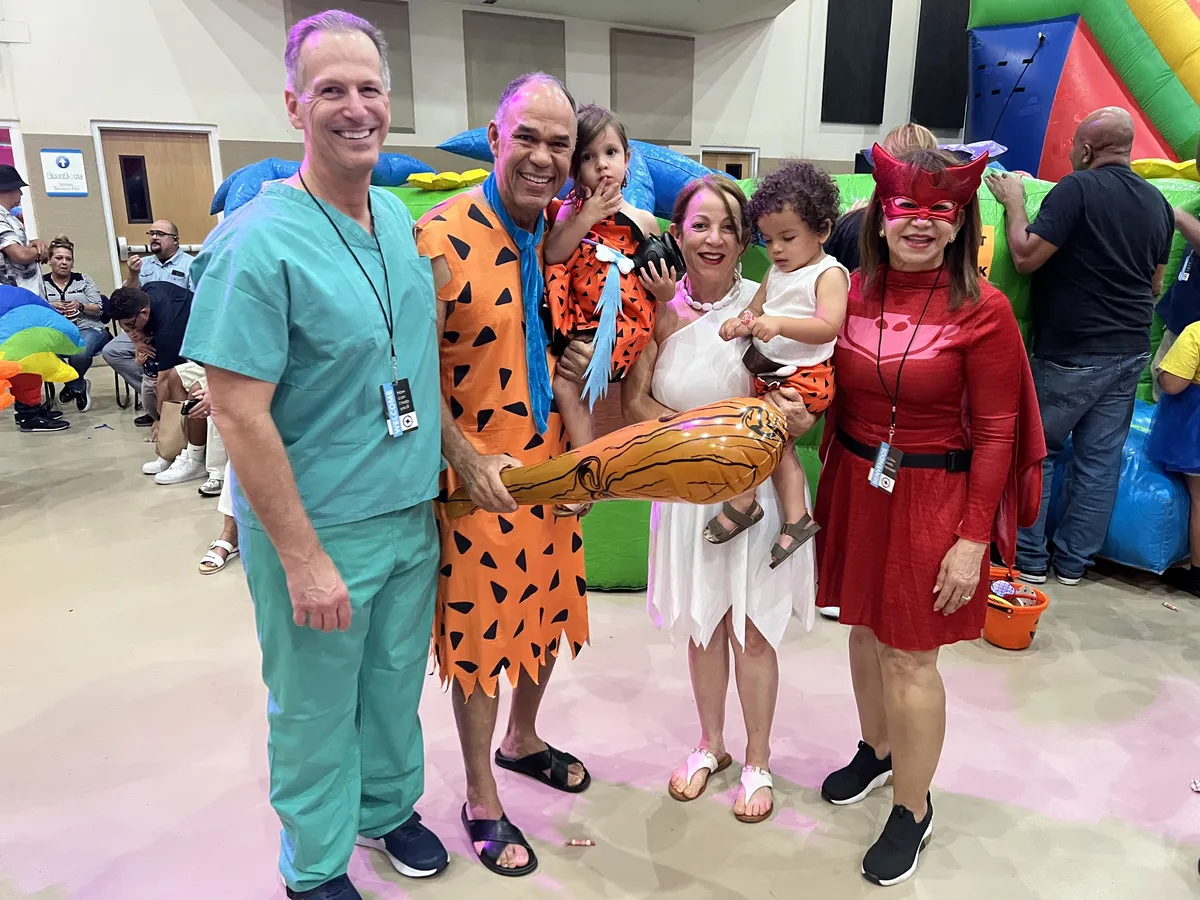
Last night we hosted a Family Fun Night at our church. The picture next to this post is from the evening. The goal was simple: give families in our community a safe, welcoming alternative, a place where parents could relax, kids could play, and neighbors could spend an evening together without worrying about where they were or who was around them.
Events like this don't happen because one person has a great idea. They happen because a team makes room for everyone. Setting up, greeting, running games, serving food, watching the doors, cleaning up afterward: every one of those jobs needs hands, and the best teams I've ever been part of put hands of every age on them.
Teenagers who are learning what it means to be depended on. Young adults in their twenties and thirties who are finding their voice and their skills. Parents and mid-career professionals carrying the heavy logistics. And our older and elderly members, people with decades of living behind them, who may no longer want the title or the spotlight but carry wisdom, steadiness, and perspective that no younger team can replicate.
That mix isn't an accident, and it isn't just a nice thing to do. It's one of the most research-supported strategies for building a team, a business, or a community that lasts. Whether you lead a church, a company, a nonprofit, or a neighborhood group, the question worth asking is the same: are we building environments where every generation has a real role?
Below are three research-backed principles for why multigenerational teamwork matters, and what it takes to make it work.
Principle 1: Mixed-Age Teams Can Outperform, but Only When You Design for It
Let's start with an honest premise. Putting people of different ages in the same room doesn't automatically produce great results. It can produce friction, misunderstanding, and quiet frustration. The research is careful about this, which is exactly why it's trustworthy.
One of the most comprehensive efforts to study this question was a six-year research program led by Jürgen Wegge and colleagues, drawing on data from more than 745 natural work teams comprising 8,848 employees across car manufacturing, administrative work, and financial services. They also tested their model with a representative survey of 2,000 members of the German workforce. Their conclusion was balanced: age-mixed teams showed both significant advantages and significant disadvantages.
What separated the teams that thrived from those that struggled came down to conditions leaders can actually influence. The researchers identified several preconditions for success, including complex, meaningful tasks, a team climate where age differences were appreciated rather than emphasized, low levels of age discrimination, and leadership that adapted to the different needs of different age groups.
A more recent study pushes the same point from another angle. Researchers at the London School of Economics' Inclusion Initiative, working with Protiviti, surveyed about 1,450 professionals in finance, technology, and professional services across the U.K. and U.S. They found that 25 percent of employees reported low productivity overall, and the numbers varied by age: 37 percent of Gen Z, 30 percent of Millennials, 22 percent of Gen X, and 14 percent of Baby Boomers.
Employees whose managers were more than 12 years older than they were were nearly one and a half times as likely to report low productivity. Here's the encouraging part. Among employees at organizations with what the researchers called intergenerationally inclusive practices, such as age-neutral career development, advancement for people at every age, and managers trained to lead across generations, the share reporting low productivity dropped to 13 percent. The gains were especially notable for younger employees. Yet roughly 40 percent of employees said their own organization wasn't delivering those practices.
Put those two studies side by side, and the lesson is clear. The generational mix is not the problem or the solution. The environment is. Teams that deliberately create a climate of respect across ages, give everyone meaningful work, and lead each person according to their needs tend to do better. Teams that simply throw ages together and hope for the best tend to leave potential on the table.
What this means for Family Fun Night and for your team: Don't just invite every age group to show up. Design roles where each person's contribution is visible and valued. A teenager running a game station, a thirty-year-old coordinating volunteers, and a retiree greeting families at the door are each doing work that matters, and each one sees the others doing it. That visibility is where respect across generations begins.
Principle 2: The Next Generation Grows Through Mentoring and Real Responsibility
The second principle is about what happens to young people when caring adults invest in them and give them real work to do.In 2014, MENTOR: The National Mentoring Partnership commissioned a report called The Mentoring Effect, produced by Civic Enterprises with Hart Research Associates. It was the first nationally representative survey of young people about their mentoring experiences, polling more than 1,100 young adults. The researchers focused on young people facing elevated risks, comparing those who had a mentor at some point growing up with those who did not.
The differences were striking. Among at-risk young adults who had a mentor, 51 percent reported holding a leadership position in a club, sports team, school council, or similar group, compared with 22 percent of those without a mentor. Forty-eight percent of mentored young people said they volunteered regularly in their communities, compared with 27 percent of those without mentors. Sixty-seven percent of mentored respondents participated regularly in sports or extracurricular activities, compared with 37 percent. And 76 percent of mentored young adults aspired to enroll in and graduate from college, compared with 56 percent of those without a mentor.
One finding deserves special attention for anyone building a team. Nearly nine in ten young people who had been mentored said they were interested in becoming mentors themselves. Mentoring doesn't just help one young person. It creates the next person willing to give back. That's how a healthy community renews itself.
A fair caveat: this was a survey, so it shows association, not proof of cause and effect, and the data come from young people's own reports. But the pattern is consistent with a large body of youth development research, and it matches what most of us can name from our own lives. Somebody older believed in us, gave us something to do, and trusted us with it.
Scripture speaks to this same dynamic. Paul wrote to a young leader, "Let no one despise you for your youth" (1 Timothy 4:12, ESV), then encouraged him to set an example in speech, conduct, love, faith, and purity. Notice that Paul didn't tell Timothy to wait until he was older. He told him to lead now and live in a way that earned trust. A healthy team gives young people that same chance: real responsibility, with real coaching alongside it.
What this means for your team: Teenagers and people in their early twenties don't need to be entertained. They need to be entrusted. Give them a job with a name, an owner, and a result, such as running check-in, leading a game, or managing the sound. Then pair each one with someone older who will check in, answer questions, and say honestly what's going well. The responsibility builds confidence, and the relationship builds character.
Principle 3: Older and Elderly Team Members Bring Experience No Other Age Group Can
The third principle often gets overlooked, because we tend to picture intergenerational work as older people helping younger ones. The research suggests two things: older and elderly team members bring something unique that younger people simply haven't had time to develop, and they benefit enormously from being included.
They benefit when their experience is put to work. Consider the Experience Corps program, developed in Baltimore and studied by researchers at Johns Hopkins. The program trains adults aged 60 and older to serve in public elementary schools, in structured roles supporting reading, math, library work, and positive communication, typically around 15 hours a week. Researchers tested it with randomized controlled trials, which are the strongest kind of evidence.
On the children's side, a pilot trial involving 1,194 children in kindergarten through third grade in six urban schools found that third graders in the Experience Corps schools scored significantly higher on a standardized reading test than children in the comparison schools. Office referrals for classroom misbehavior dropped by about half in the Experience Corps schools, while they stayed the same in the control schools. The program achieved this without burdening school staff.
On the older adults' side, the Baltimore Experience Corps Trial, a randomized controlled trial of 702 older adults, tested whether meaningful volunteer engagement could protect cognitive health. The roles were designed to combine mental, social, and physical activity, and the researchers report dose-dependent cognitive, psychosocial, lifestyle, and brain benefits for volunteers who stayed in the program for up to two years. The same arrangement helped children read better and helped older adults stay sharper and more engaged. The program was built around generativity, the deep human desire to give back and pass something meaningful to the next generation.
They bring wisdom, with one important caveat. Psychologist Igor Grossmann and colleagues have spent years measuring wisdom as something practical: how well people reason through real social conflicts. In a 2012 study published in Psychological Science, random samples of Americans were interviewed about stories of interpersonal and intergroup conflict.
The qualities researchers associate with wise reasoning, including recognizing multiple perspectives, acknowledging the limits of your own knowledge, and valuing compromise, increased with age among Americans. (Notably, the same pattern did not appear among the Japanese participants, which tells us culture shapes how wisdom develops.) A related 2013 study found that wise reasoning was linked to greater life satisfaction, less negative emotion, better social relationships, and even greater longevity, and that these links held after accounting for intelligence and several other factors.
Here's the honest caveat, and it's an important one. A 2014 study by Grossmann and Ethan Kross found that older and younger adults reasoned about their own personal conflicts about equally well, and both groups reasoned more wisely when they stepped back and looked at their situation from a third-person perspective. In other words, wisdom doesn't arrive automatically with age. It grows through reflection. That's a strong argument for giving your elders structured opportunities to reflect, tell their stories, and mentor, rather than simply assuming their experience will be absorbed by osmosis.
They bring emotional steadiness. One of the most striking findings in aging research comes from Laura Carstensen and her colleagues at the Stanford Center on Longevity. Their study tracked the same people over more than a decade, which made it the first of its kind to follow individuals over a long period rather than compare different age groups at a single moment. They found that as people grew older, they tended to become more emotionally stable, more positive overall, and better able to work through highly emotional problems.
Carstensen's explanation, known as socioemotional selectivity theory, is that when people become more aware that time is precious, they shift their priorities toward what matters most, especially relationships and meaning. Her broader observation was that a society with more older adults could become a wiser and kinder one.
Think about what that looks like at a community event. When the check-in line backs up or the sound system quits ten minutes before doors open, it's often the longtime member who calmly says, "We've been through worse." That steadiness lowers the temperature for everyone around them, including the teenagers who are watching closely to learn how a mature adult handles pressure.
They hold the story. Elders also carry something no data set can capture: institutional memory. They know why a tradition started, what was tried before, which neighbors have been part of the community for fifty years, and what it cost to build what you now enjoy. That's an observation rather than a research finding, but anyone who has led a long-running team will recognize it. It's the reason a thoughtful leader asks an elder, "What do you remember about how we did this before?"
Scripture treats this experience with real respect. "Wisdom is with the aged, and understanding in length of days" (Job 12:12, ESV). Proverbs describes gray hair as a crown of glory gained in a righteous life (Proverbs 16:31, ESV). And Psalm 145:4 gives the pattern for how it's meant to flow: "One generation shall commend your works to another" (ESV). Paul urges older men and women to teach what is good and to train the younger (Titus 2). Wisdom is meant to be passed along, and passing it along is part of what gives later life its meaning.
What this means for your team: If you have older or elderly members who say they've "stepped back," ask what kind of role would feel meaningful to them. They may not want to run the event, but they may love mentoring a teenager, welcoming first-time visitors, sharing a skill they've spent forty years refining, or simply sitting at a table where families can stop and talk with them.
Design for dignity and ability: offer seating, shorter shifts, easy transportation, and a partner for tasks that need lifting. Health and energy vary widely among older adults, so ask rather than assume. And remember the lesson from Experience Corps: meaningful roles, a little training, and the company of peers make the difference between feeling included and feeling like a guest of honor.
Putting It Into Practice: A Simple Multigenerational Team Plan
If you're ready to build a team that draws on every age group, here's a practical starting point you can use for your next event, project, or season.
Teens (about 13 to 19): Give them ownership of a defined piece of the work, with an adult coach alongside. Let them lead something visible, and let them see the result.
Young adults (about 20 to 35): Invite them to help plan, not just serve. They often bring energy, technology skills, fresh ideas, and a strong sense of what other people their age care about. Give them a seat where decisions are made.
Mid-career adults (about 35 to 55): These team members often carry the heaviest load, so protect their time and ask them to be coaches and connectors. Their experience in managing people, budgets, and logistics is a valuable training ground for younger members.
Older adults (about 55 to 74): Invite them into roles built around mentoring, hospitality, skill-sharing, and continuity. Make sure they feel needed, not just thanked.
Elders (75 and up): Invite them into roles built around presence, story, and prayer: greeting at the door, sitting with families, pairing with a teenager as a conversation partner, or recording a few memories of how the community began. Design roles around energy and ability, and treat their time as a gift.
Across every age group:
Pair people across generations on the same task, not just in the same room.
Debrief together afterward. Ask what each person learned and what they'd do differently. Reflection turns an event into growth.
Say thank you specifically. Name what each person did and why it mattered.
Watch for stereotypes in your own language, such as "kids these days" or "they're set in their ways." Wegge's research suggests that a climate of appreciation, rather than emphasis on age differences, is one of the conditions that makes mixed-age teams work.
Questions for Your Team to Reflect On
Which age groups are most visible on your team right now, and which are missing?
Does every generation on your team have a role that's meaningful, or are some people mostly spectators?
Who is mentoring your teenagers and young adults, and who is mentoring them back in unexpected ways?
Have your older and elderly team members been asked what role would be most fulfilling to them, and have you made it easy for them to say yes?
What's one project this quarter where you could deliberately pair a younger and an older team member?
When your team debriefs, are you asking what people of different ages learned from each other?
Who are the elders in your community whose stories and experience you haven't yet asked about?
The Takeaway
Last night's Family Fun Night was one evening, but it reflected something bigger: a community thrives when people of every age have a place to contribute. The research is consistent. Teams do best when leaders create conditions of respect and meaningful work for every age. Young people grow when they are trusted and mentored. And older and elderly adults, who carry wisdom, steadiness, and the story of where a community has been, flourish when they are given the chance to pass it on.
None of this requires a large budget. It requires intention, and a willingness to look around your team and ask who isn't at the table yet. The next generation of leaders is already watching how we work together. Let's give them a team worth joining.
What's one thing you can start doing differently to build your multigenerational your team?
What will it cost you not to be prepared for your next role?
Are you considering a new role in the next 6-24 months? If so, how are you preparing for this next role before your leadership gaps get exposed? Register for the free Certified Coach Accelerator Workshop, where I go deeper on the ICF certification and credentialing pathway, the coaching business roadmap, and what it looks like to build a practice, or pivot in your career, around your existing leadership experience.
Register Here: https://imaginecoachingacademy.com/live-webinar
Marcel Sanchez is the founder of Imagine Coaching Academy, an ICF Level 1 Accredited Coaching Education Provider. He is an ICF Professional Certified Coach with a mission to equip faith-based business and ministry leaders with the credential, competence, and confidence to lead at their highest level.
References
Wegge, J., Jungmann, F., Liebermann, S., Shemla, M., Ries, B. C., Diestel, S., & Schmidt, K. H. "What Makes Age Diverse Teams Effective? Results from a Six-Year Research Program." PubMed — https://pubmed.ncbi.nlm.nih.gov/22317517
Wegge et al., summary record — https://pure.eur.nl/en/publications/what-makes-age-diverse-teams-effective-results-from-a-six-year-re/
The Inclusion Initiative (London School of Economics) and Protiviti. Generations Survey Report: Multigenerational Workforce — https://www.lse.ac.uk/tii/assets/documents/lse-generations-survey-report-global.pdf
"Age-Inclusive Work Practices Lead to Increased Productivity, Study Finds," Allwork.Space — https://allwork.space/2024/01/age-inclusive-work-practices-lead-to-increased-productivity-study-finds/
Stanford Center on Longevity, coverage of the LSE/Protiviti study — https://longevity.stanford.edu/?p=77530
Bruce, M., & Bridgeland, J. (2014). The Mentoring Effect: Young People's Perspectives on the Outcomes and Availability of Mentoring. Civic Enterprises with Hart Research Associates, for MENTOR: The National Mentoring Partnership — https://www.mentoring.org/resource/the-mentoring-effect/
"Survey: Young People Tell How Mentoring Helps," Youth Today — https://youthtoday.org/2014/02/survey-young-people-tell-how-mentoring-helps/
"Poll Suggests Mentors Influence College Aspirations of Youth," Education Week — https://www.edweek.org/education/poll-suggests-mentors-influence-college-aspirations-of-youth/2014/01
Rebok, G. W., Carlson, M. C., Glass, T. A., et al. (2004). "Short-Term Impact of Experience Corps Participation on Children and Schools: Results from a Pilot Randomized Trial." Journal of Urban Health, 81(1), 79–93 — https://pmc.ncbi.nlm.nih.gov/articles/PMC3456143
Carlson, M. C., & Rebok, G. W. (2019). "The Impact of Meaningful Volunteer Engagement in Aging Adults: The Baltimore Experience Corps Trial." Innovation in Aging — https://www.ncbi.nlm.nih.gov/pmc/articles/PMC6845935/
"Increases in Lifestyle Activities as a Result of Experience Corps Participation," PMC (Baltimore trial design, N = 702) — https://pmc.ncbi.nlm.nih.gov/articles/PMC4338117
Grossmann, I., Karasawa, M., Izumi, S., Na, J., Varnum, M. E. W., Kitayama, S., & Nisbett, R. E. (2012). "Aging and Wisdom: Culture Matters." Psychological Science, 23(10), 1059–1066 — https://shareok.org/handle/11244/25191
Grossmann, I., Na, J., Varnum, M. E. W., Kitayama, S., & Nisbett, R. E. (2013). "A Route to Well-Being: Intelligence Versus Wise Reasoning." Journal of Experimental Psychology: General, 142(3), 944–953 — https://doi.org/10.1037/a0029560
Grossmann, I., & Kross, E. (2014). "Exploring Solomon's Paradox: Self-Distancing Eliminates the Self-Other Asymmetry in Wise Reasoning About Close Relationships in Younger and Older Adults." Psychological Science, 25(8), 1571–1580. Summarized by the Association for Psychological Science — https://www.psychologicalscience.org/news/were-only-human/the-paradoxical-wisdom-of-solomon.html
Stanford University (2010). "Stanford Study Shows Getting Older Leads to Emotional Stability, Happiness" (Carstensen et al., Psychology and Aging) — https://www.eurekalert.org/news-releases/878873
Stanford Life-span Development Laboratory, "Research Overview: Socioemotional Selectivity Theory" — https://lifespan.stanford.edu/research
Scripture (ESV)
1 Timothy 4:12
Psalm 145:4
Job 12:12
Proverbs 16:31
Titus 2:1–8