Character Doesn't Change When the Pressure Does
Character is what determines whether people still trust you once the pressure hits.
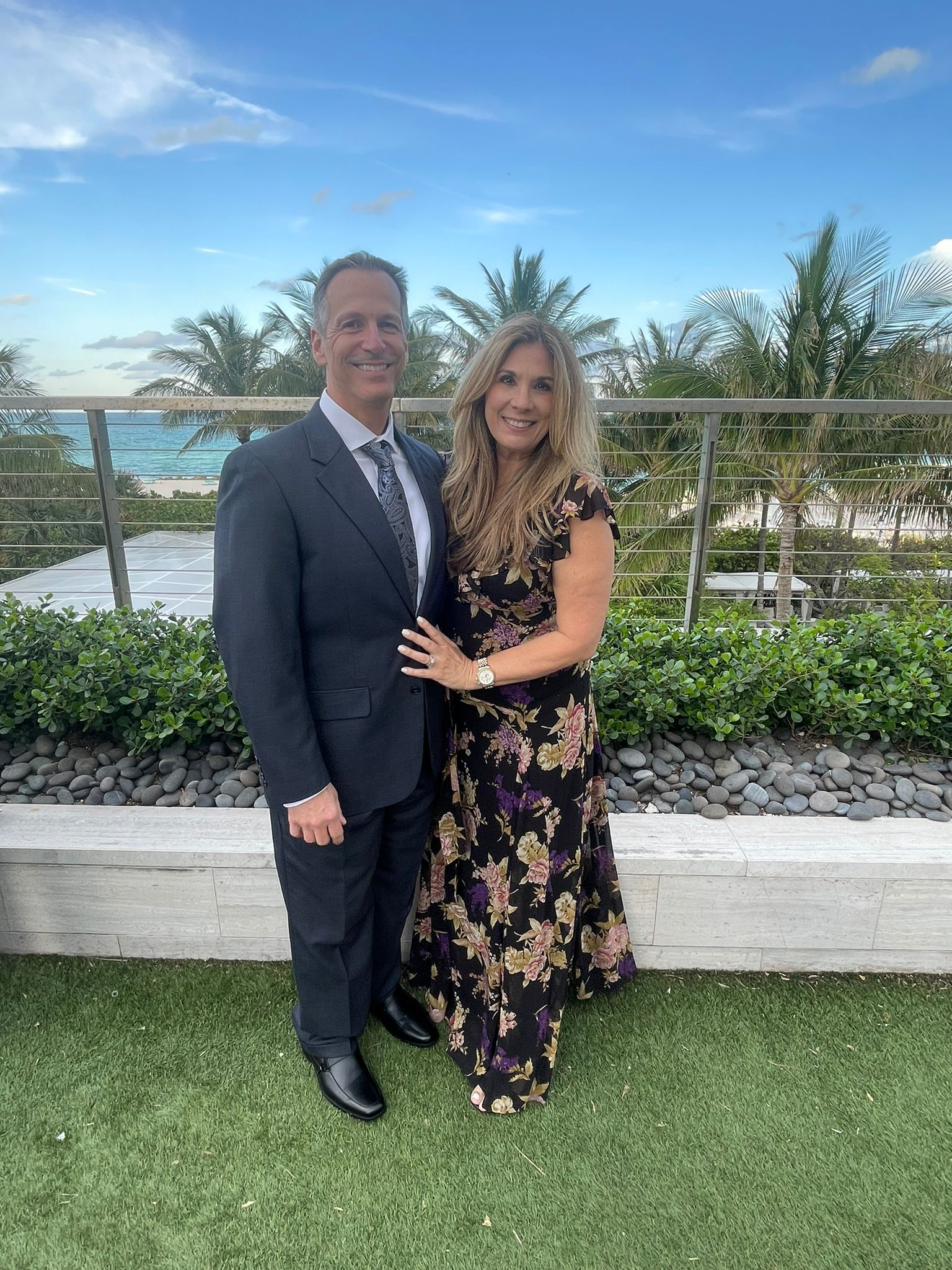
I've been fortunate to have a front-row seat to that truth both locally and globally. The three men in the photo span different seasons of life and different levels of leadership. Each one has spent decades influencing people at a global scale. Each one has endured significant hardships, both personally and professionally. And each of them have demonstrated resiliency and a consistency of character that is uncommon in today's world. They've also influenced my life and my leadership in the process.
What they share isn't a title or an industry. It's this: their character has looked the same in the hard seasons as it did in the easy ones. That consistency is what's made them the kind of leaders whose influence has reached far beyond their own teams, and it's a big part of why I respect them as much as I do.
That's the subject of this post. Not motivation. Not a framework to sell. Just three things I believe are true about leadership consistency — backed by research, and by a few lines from God's Word that got there first.
Principle 1: Consistency Between Word and Deed Is What Earns Trust
Leadership researchers Jim Kouzes and Barry Posner have spent more than two decades surveying people around the world on one simple question: what do you look for and admire in a leader? Across tens of thousands of respondents, one trait consistently outranks every other — honesty, cited by roughly 9 in 10 people as the quality they most want in someone they're willing to follow. But when Kouzes and Posner dig into what people actually mean by "honest," it isn't abstract. It means a leader is consistent between word and deed and willing to take a stand on important principles.
Separate research on trust in leadership — including a systematic review of studies across healthcare and other high-stakes fields — found the same pattern: the specific behaviors that build trust in a leader are honest and predictable action, consistency, open interaction, and collaboration. Not charisma. Not vision statements. Consistency.
There's a leader in the Old Testament, Daniel, who lived this out under about as much political pressure as anyone could face — serving under a king who was actively looking for a reason to remove him. Scripture says his rivals combed through his record and could find nothing, because he was faithful (Daniel 6:4). That's not a story about a lucky streak. It's a description of a track record so consistent that even people looking for a flaw couldn't manufacture one.
Proverbs puts the principle plainly: "The integrity of the upright guides them" (Proverbs 11:3, ESV). Integrity, in its original sense, means wholeness — being the same person in the boardroom, the hallway conversation, and the moment no one's watching.
Audit the gap between what you say you'll do and what you actually do, especially in small commitments. Trust isn't built in the big speech. It's built in whether you followed through on the small thing you said you would.
Principle 2: Perseverance Under Pressure Is Where Character Gets Proven — Not Created
Psychologist Angela Duckworth's research on grit — passion and perseverance for long-term goals — produced one of the more striking findings in leadership development research. At the U.S. Military Academy at West Point, incoming cadets go through a brutal seven-week training period nicknamed "Beast Barracks." Grit scores turned out to be the best predictor of who made it through — outperforming intelligence, leadership ability, and physical fitness.
That finding matters for a reason beyond the battlefield: it suggests character consistency isn't primarily built in the moment of crisis. It's revealed there. The cadets who persevered weren't discovering new character under pressure — the pressure exposed the character they'd already been building in a hundred small, unseen decisions beforehand.
James, writing to a scattered and struggling community, makes almost the identical point: trials aren't random obstacles to endure until life goes back to normal. They're the process. "The testing of your faith produces steadfastness" (James 1:3, ESV). The word translated "steadfastness" is the same idea Duckworth is measuring — the capacity to keep going, unchanged in conviction, when it would be easier not to.
Stop treating your hardest season as an interruption to your leadership and start treating it as the training ground for it. The habits and convictions you're building right now — in the unremarkable, unwatched decisions — are what will hold when the real pressure arrives.
Principle 3: Predictable Leaders Create Psychologically Safe Teams
The third principle shifts from the leader's internal character to its external effect on a team. A 2026 workplace trust study found that one of the two core forms of trust employees look for in a leader is what researchers call predictability — the sense that a leader consistently does what they say they will do, which creates a stable and fair work environment and lowers uncertainty for everyone around them.
That matters because uncertainty is expensive. Teams led by inconsistent leaders spend real cognitive and emotional energy trying to predict which version of the leader will show up that day — and energy spent managing a moving target is energy not spent doing the actual work. Consistency, by contrast, frees a team to focus outward instead of constantly reading the room.
Hebrews captures the same idea in describing the ultimate model of unwavering character: "Jesus Christ is the same yesterday and today and forever" (Hebrews 13:8, ESV). It's a theological statement, but it's also a leadership standard worth aspiring to, however imperfectly: be the kind of leader whose people never have to wonder which version they're getting.
Ask someone on your team, honestly, whether they'd describe you as predictable — in the good sense. If they hesitate, that hesitation is worth exploring before it costs you their trust.
The Thread That Connects All Three
Talent will get you a seat at the table. But it's consistency of character — the version of you in the crisis matching the version of you in the calm — that determines whether people still want to follow you once they've seen both. The men in the photo with me didn't earn their influence through a single great moment. They earned it through decades of being the same person, again and again, when almost no one was checking.
That's the leadership I'm aiming for. I imagine it's the leadership you're aiming for too.
What's one thing you can start doing differently to grow your character this week?
What will it cost you not to be prepared for your next role?
Are you considering a new role in the next 6-24 months? If so, how are you preparing for this next role before your leadership gaps get exposed? Register for the free Certified Coach Accelerator Workshop, where I go deeper on the ICF certification and credentialing pathway, the coaching business roadmap, and what it looks like to build a practice, or pivot in your career, around your existing leadership experience.
Register Here: https://imaginecoachingacademy.com/live-webinar
Marcel Sanchez is the founder of Imagine Coaching Academy, an ICF Level 1 Accredited Coaching Education Provider. He is an ICF Professional Certified Coach with a mission to equip faith-based business and ministry leaders with the credential, competence, and confidence to lead at their highest level.
References
Consistency, Trust & Credibility
Kouzes, J. & Posner, B., The Leadership Challenge — research summarized in "Leadership Challenge Notes: Key Concepts from Kouzes & Posner," Studocu — https://www.studocu.com/en-us/document/oklahoma-city-community-college/leadership-development/the-leadershiop-challenge-notes/38720943
"Trust in the Leader and Trust in the Organization in Healthcare: A Concept Analysis Based on a Systematic Review," PMC — https://pmc.ncbi.nlm.nih.gov/articles/PMC11918882/
Perseverance & Character
Duckworth, A. Grit: The Power of Passion and Perseverance — West Point "Beast Barracks" study summarized in "Angela Duckworth and the Research on 'Grit,'" American RadioWorks — https://americanradioworks.publicradio.org/features/tomorrows-college/grit/angela-duckworth-grit.html
"Understanding 'Grit' with Author Angela Duckworth," Vistage — https://vistage.com/research-center/personal-development/20250324-understanding-grit-angela-duckworth/
Predictability & Psychological Safety
"The Two Types of Trust Most Leaders Confuse," Next Element Trust & Conflict at Work Study — https://www.next-element.com/resources/blog/the-two-types-of-trust-most-leaders-confuse/
Scripture (ESV)
Daniel 6:4
Proverbs 11:3
James 1:2–4
Hebrews 13:8