Leading Through Service: What Cross-Cultural Ministry Teaches Our Young Leaders
How does serving others cross-culturally impact your leadership development as a young leader?
Leading Through Service: What Cross-Cultural Ministry Teaches Our Young Leaders
An encouragement for the leaders of TIME International's mission trips
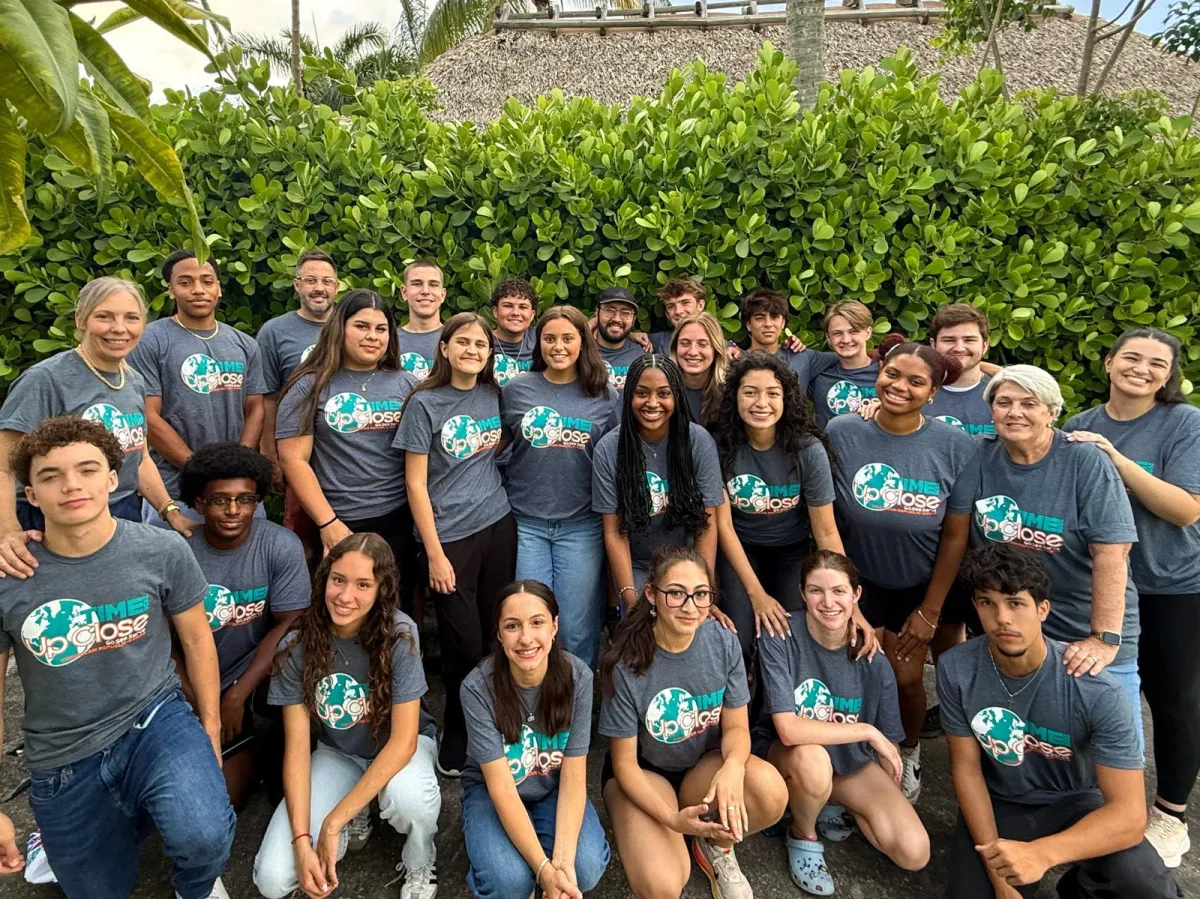
This summer, a group of students and young adults boarded a plane in Miami headed for Kenya or the Dominican Republic. They carry no fluency in Swahili, but some do in Spanish. What they carry instead is a wordless drama, a willingness to be uncomfortable, and a trust that God can use ordinary obedience to do extraordinary things.
For those of us who lead these teams — and right now, that includes leaders like Savanah (my daughter) serving on this year's Kenya trip — it's worth pausing to name something easy to overlook in the busyness of training, fundraising, and logistics: this trip is not a detour from leadership development. It is leadership development. Few experiences will shape a young leader's character more than spending two weeks serving people in humble gratitude.
Here are five leadership principles that emerge when we serve cross-culturally and expect nothing in return.
1. Leadership Begins with Emptying, Not Acquiring
Western leadership culture often measures growth by what a leader gains — skills, credentials, influence, a bigger platform. The mission field flips that script entirely. A TIME trip strips away comfort, control, and competence. You often don't speak the language. You don't know most of the customs. You can't even rely on words to share the gospel — that's why the dramas are wordless in the first place.
This is precisely the posture Paul describes in Philippians, quoting what may be the earliest Christian hymn:
"Have this mind among yourselves, which is yours in Christ Jesus, who, though he was in the form of God, did not count equality with God a thing to be grasped, but emptied himself, by taking the form of a servant, being born in the likeness of men." (Philippians 2:5–7, ESV)
Christ's leadership model is downward mobility — emptying, not climbing. A leader who has served others in different villages, schools, and orphanages understands authority differently than one who has only ever directed from the front. The principle: the leaders who will go furthest are the ones who have first learned to go low by serving others.
2. Trust Is Built Through Presence, Not Performance
One of the most striking things about how TIME approaches missions is that the message itself doesn't depend on language. The drama communicates the gospel (the good news about the life, death, burial, and resurrection of Jesus Christ) without a single spoken word — but the relationships around the drama are built entirely on presence: sitting with missionaries, working alongside national believers, showing up day after day in a culture that isn't your own.
Young leaders often assume that leadership is about having the right words — the perfect speech, the persuasive pitch, the confident answer. Cross-cultural service teaches the opposite lesson: sometimes leadership is simply staying present when you can't perform at all. You can't impress anyone in a language you don't speak. You can only show up, serve faithfully, and let your consistency speak for itself.
"Let your light shine before others, so that they may see your good works and give glory to your Father who is in heaven." (Matthew 5:16, ESV)
The light shines through works, not eloquence. A leader who has learned to build trust through quiet, consistent presence — rather than through being the most articulate person in the room — has learned something that will serve them in every future role, from a classroom to a boardroom to a church staff meeting.
3. Real Leadership Serves Without Needing Credit
On a TIME trip, no one back home will ever fully know what a leader did in Kenya or the Dominican Republic. There's no performance review, no audience, no guarantee the local missionary will even remember your name in five years. You serve the people, encourage the students, work alongside missionaries, and at times, lead VBC (Vacation Bible Club) — and then you go home, and life in that village or town continues largely unaffected by your absence, except for the seeds that were planted.
This is the leadership principle that's hardest to learn and most valuable once learned: serve as though no one is watching, because spiritually speaking, no one needs to be.
"But when you give to the needy, do not let your left hand know what your right hand is doing, so that your giving may be in secret. And your Father who sees in secret will reward you." (Matthew 6:3–4, ESV)
Jesus assumes an audience of One. Leaders who learn this early — that the work has value even when it's invisible, even when it's unrewarded, even when the only witness is God — become leaders who don't burn out chasing recognition later. They've already learned to find their reward elsewhere, in their spiritual relationship with Christ.
4. Leadership Is Forged Under Pressure, in Unfamiliar Places
It's no accident that TIME trips ask travelers to leave their routines, their language, their comfort, and even (for the trip's two weeks) much of their control over their own schedule. Comfortable environments rarely produce strong leaders. Stretching environments do.
A Trip Director navigating a missed connection, a sick teammate, a last-minute change in the drama schedule, or a cultural misunderstanding is being trained in something no classroom can replicate: how to stay calm, stay kind, and keep leading when nothing is going according to plan. That's exactly the leadership a young person will need for marriage, for parenting, for the workplace, for ministry of their own one day.
"We rejoice in our sufferings, knowing that suffering produces endurance, and endurance produces character, and character produces hope." (Romans 5:3–4, ESV)
Notice the order: suffering doesn't bypass the process, it produces it. The discomfort of a mission trip — the heat, the homesickness, the logistics, the language barrier — isn't an unfortunate side effect of going. It's part of how God builds the endurance and character that mark a mature leader.
5. Leaders Multiply by Pouring into Others, Not by Being the Center
TIME's model itself teaches this principle structurally. The drama teams don't go to perform for an audience and leave — they go to work alongside local missionaries, learning from people who have given their lives to that country long before the team arrived and will continue long after the team departs. The trip is built around partnership, not spotlight.
A leader who has spent two weeks supporting someone else's long-term calling — carrying their vision, serving their congregation, connecting with their community, amplifying their work rather than their own — learns a posture that every great leader eventually needs: the goal is not to be indispensable, but to make others more effective.
"And what you have heard from me in the presence of many witnesses entrust to faithful men, who will be able to teach others also." (2 Timothy 2:2, ESV)
Paul's vision of leadership is generational and multiplicative — pour into people who will pour into others. A young leader who learns on the mission field to serve a missionary's vision instead of building their own kingdom is being trained for exactly this kind of multiplying leadership.
A Word to the Leaders Going This Summer
To Savanah and every other leader currently in Kenya or the Dominican Republic this year: what you are doing matters far beyond the days you'll spend overseas. You are being formed. The discomfort, the language barrier, the long hours, the moments when nothing is in your control — these are not obstacles to your leadership development. They are your leadership development.
You will likely come home with sunburn and stories and probably a few blisters. But you'll also come home having practiced, in the most concrete way possible, what it means to empty yourself, build trust through presence, serve without needing credit, grow through pressure, and pour into someone else's calling.
That is exactly the kind of leader the world — and the church — needs more of.
"And whoever would be first among you must be slave of all. For even the Son of Man came not to be served but to serve, and to give his life as a ransom for many." (Mark 10:44–45, ESV)
Godspeed to every team this summer — in Kenya, in the Dominican Republic, and wherever this kind of leadership takes you next.
Participating in the Great Commission at a young age will have a great impact on your life than you may realize at the moment. Take it all in and enjoy every moment.
I'm so proud of each of you. I look forward to hearing the stories once you return home in a few weeks.
Is Becoming a Certified Coach Your Next Step to Grow as a Leader?
I invite you to take two minutes and register for the next complimentary ICF Coach Webinar, where I'll go deeper on the ICF certification pathway and how it can help you grow as a leader, empower more leaders, and prepare for your next opportunity, all without leaving your office.
Register Here: https://linksi.me/tQTwM