
Top 5 Online Platforms for Executive Coaching
Table of Contents
- What Makes an Executive Coaching Platform Stand Out
- Quick Comparison Table: Top 5 Platforms at a Glance
- 1. Imagine Coaching Academy: ICF-Certified Training for Leaders
- 2. BetterUp: AI-Powered Insights Meet Human Coaching
- 3. CoachHub: Global Scalability and Language Support
- 4. Torch: Leadership Development With Built-In Measurement
- 5. Vistage: Peer Advisory and Executive Coaching Combined
- Best Executive Coach Certification Programs 2026
- Understanding Executive Coaching Session Structure
- How to Choose the Right Platform for Your Leadership Goals
- Frequently Asked Questions
Last Updated: September 30, 2026
What Makes an Executive Coaching Platform Stand Out
When you're evaluating online platforms for executive coaching, you're really asking one question: which tool will help me grow as a leader without consuming my entire schedule? The answer depends on what you're trying to achieve.
A strong executive coaching platform combines three core elements. First, it connects you with qualified coaches who understand your industry and leadership challenges. Second, it provides measurable outcomes so you can track progress toward specific goals. Third, it fits into your workflow without adding administrative burden.
The market has shifted dramatically in recent years. What once meant flying to an in-person retreat now happens through video sessions, AI-powered insights, and structured feedback loops. But not all platforms deliver the same value. Some excel at scale and analytics. Others focus on personalized coaching relationships. A few bridge both worlds.
At Imagine Coaching Academy, we empower ambitious leaders, entrepreneurs, and business professionals to become certified coaches. The difference between a platform that transforms your leadership and one that becomes another unused subscription often comes down to three factors: alignment with your specific goals, the quality of coaching available, and how well the platform measures what actually matters.
Below, we'll walk you through the top 5 online platforms for executive coaching, what makes each one distinct, and how to choose the right fit for your leadership journey.
Quick Comparison Table: Top 5 Platforms at a Glance
| Platform | Best For | Key Strength | Delivery Model |
|---|---|---|---|
| Imagine Coaching Academy | Leaders wanting ICF-certified training | Comprehensive 125-hour program with live + on-demand | Fully online, office-friendly |
| BetterUp | Enterprise organizations at scale | AI-powered insights + human coaching | Digital platform with coach network |
| CoachHub | Global companies with language needs | 80+ language support and AI matching | Digital platform, international coaches |
| Torch | Organizations combining coaching and mentoring | Integrated leadership measurement | Digital platform with mentoring tools |
| Vistage | CEOs seeking peer advisory | Peer board + one-on-one coaching | Hybrid (peer groups + digital) |
1. Imagine Coaching Academy: ICF-Certified Training for Leaders
If you're serious about becoming a certified coach yourself, or developing coaching skills to strengthen your leadership, Imagine Coaching Academy stands apart. This is not a coaching platform in the traditional sense. It's a comprehensive 125-hour ICF Certified Coach Training program designed for leaders who want to integrate professional coaching methodology into their management style.
The program combines live instruction, on-demand modules, peer coaching, observed coaching, mentor coaching, and performance labs. Everything runs 100% online, which means you complete it without leaving your office or rearranging your schedule around travel. The curriculum aligns directly with ICF standards, so upon completion, you're positioned to pursue ICF credentialing.
What sets this apart from other coaching training programs is the focus on practical application. You're not just learning theory. You're practicing with peers, receiving feedback from experienced mentors, and building the actual skills you'll use immediately with your team. Many executives complete this program and find that their leadership effectiveness increases before they ever formally coach another person, simply because they've internalized coaching principles.
The program offers three specializations: Certified Executive Coach, Certified Life Coach, and Certified Marriage Coach. This flexibility means whether you're focused on professional development, personal growth, or helping others through life transitions, there's a pathway that matches your goals.
2. BetterUp: AI-Powered Insights Meet Human Coaching
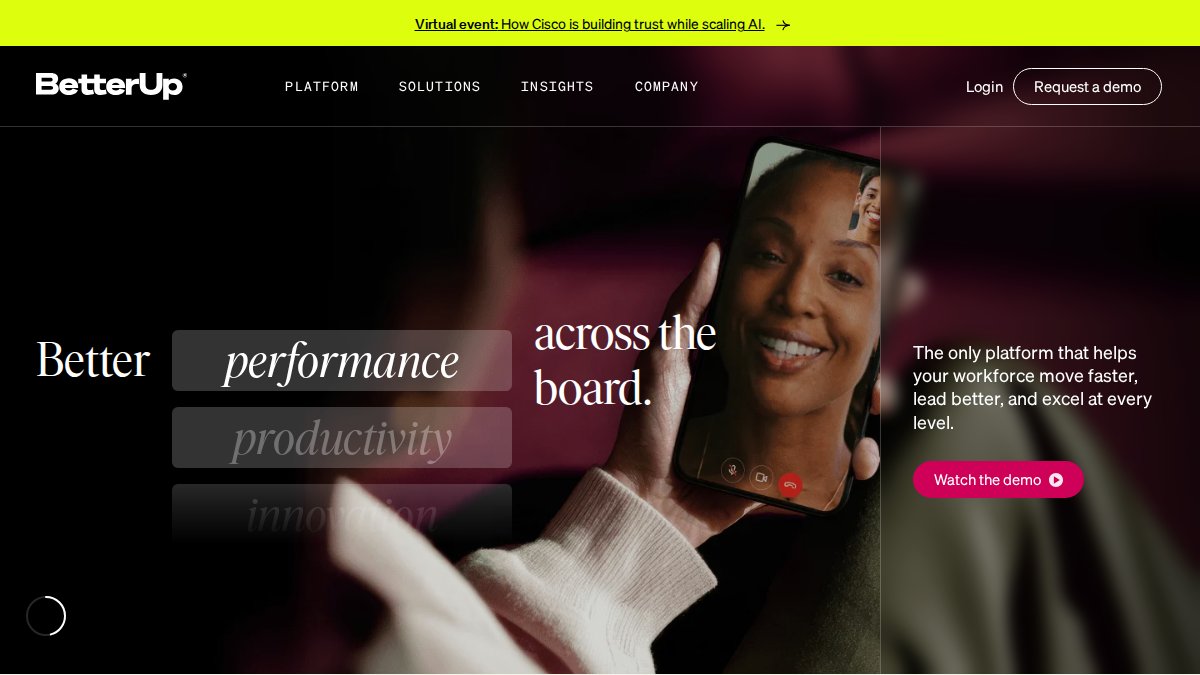
BetterUp represents the enterprise approach to executive coaching. It combines a large network of certified professional coaches with AI-driven insights that personalize your development plan based on your specific challenges and goals.
The platform's strength lies in its reporting and analytics capabilities. Organizations can track coaching impact across teams, measure behavioral change, and connect coaching outcomes to business metrics. If you're an executive at a large organization where demonstrating ROI on coaching investments matters, BetterUp's measurement framework is compelling.
The AI component works alongside human coaches, not instead of them. The system analyzes your coaching sessions and progress, then surfaces personalized development recommendations. This hybrid model appeals to organizations that want both the human connection of coaching and the data-driven insights that modern leadership development demands.
The coaching network is extensive and global, which means you can often find coaches with specific industry expertise or leadership experience relevant to your challenges. Sessions happen through their digital platform, making scheduling flexible and accessible.
3. CoachHub: Global Scalability and Language Support
CoachHub solves a specific problem: how do you deliver consistent, high-quality coaching across a global organization where your teams speak different languages?
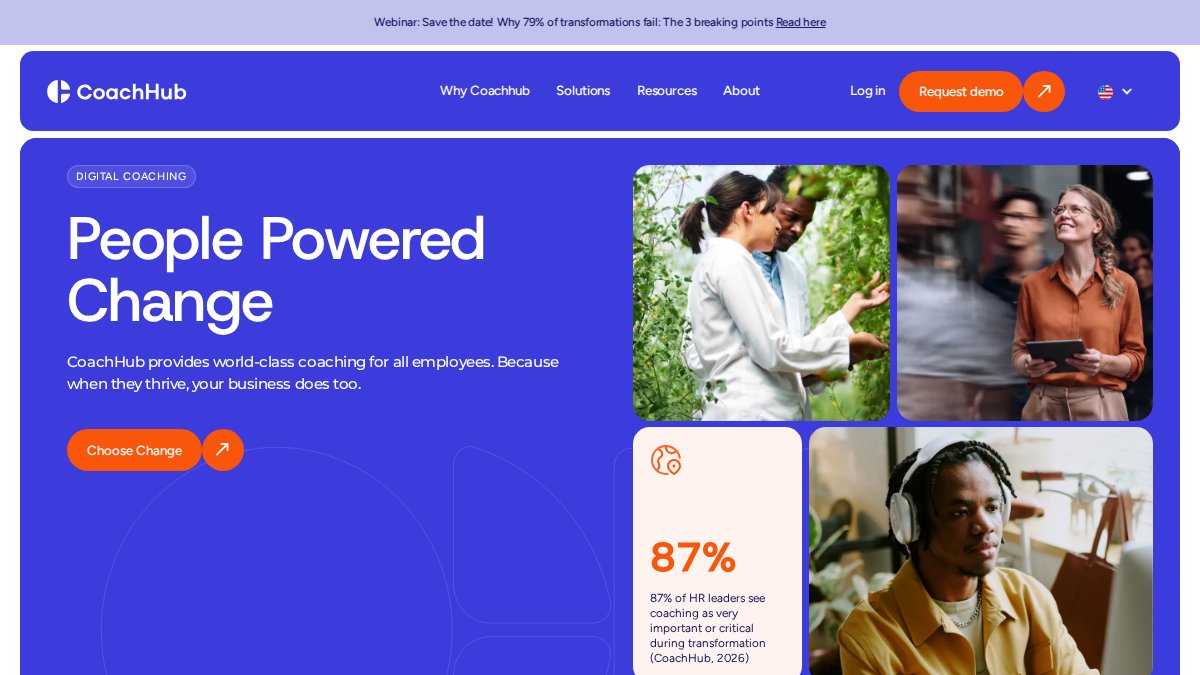
The platform supports over 80 languages and uses an AI-based matching algorithm to connect employees with coaches who understand their cultural context and language. For multinational organizations or companies with distributed teams, this is a significant advantage. You're not forcing executives in different regions into a one-size-fits-all coaching model.
The integrated development dashboard gives HR teams visibility into coaching engagement and progress across the organization. This matters when you're rolling out coaching as part of a broader leadership development initiative. You can see who's engaged, what topics are being addressed, and where coaching is driving measurable change.
The matching technology is worth noting. Rather than manually assigning coaches, the platform learns about each participant's goals and preferences, then suggests coaches most likely to create strong coaching relationships. This reduces the friction that sometimes comes with traditional coach assignment.
4. Torch: Leadership Development With Built-In Measurement
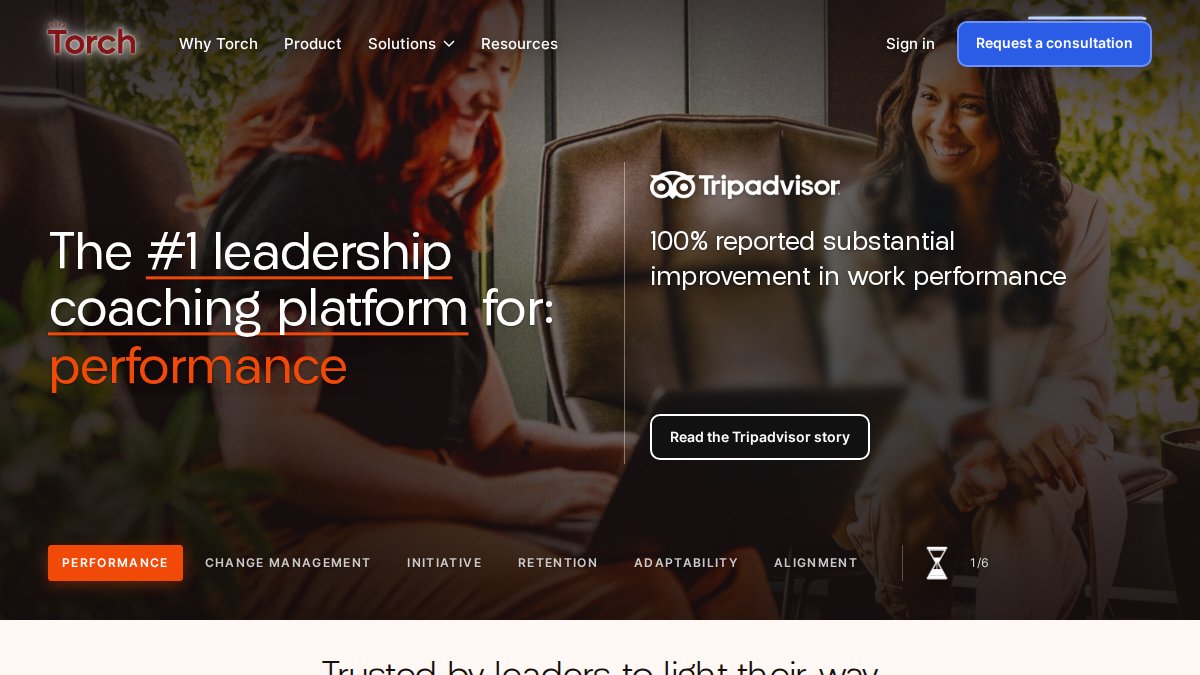
Torch takes a different angle. Instead of positioning itself purely as a coaching delivery platform, it's a comprehensive leadership development ecosystem that integrates coaching, mentoring, peer learning, and structured feedback.
The platform's standout feature is its approach to measuring leadership growth. Rather than generic engagement metrics, Torch focuses on real leadership outcomes: skill development, behavioral change, and team impact. This matters because many coaching programs struggle to answer the fundamental question: did this actually make me a better leader?
Torch lets you define what leadership development means in your organization, then tracks progress against those specific definitions. You might be working on executive presence, decision-making speed, or emotional intelligence. The platform helps you measure movement on those dimensions.
The mentoring integration is particularly valuable. Many organizations have experienced leaders who could mentor emerging talent but lack a structured way to do it. Torch provides the framework, tracking, and accountability that turns informal mentoring into a strategic development tool.
5. Vistage: Peer Advisory and Executive Coaching Combined
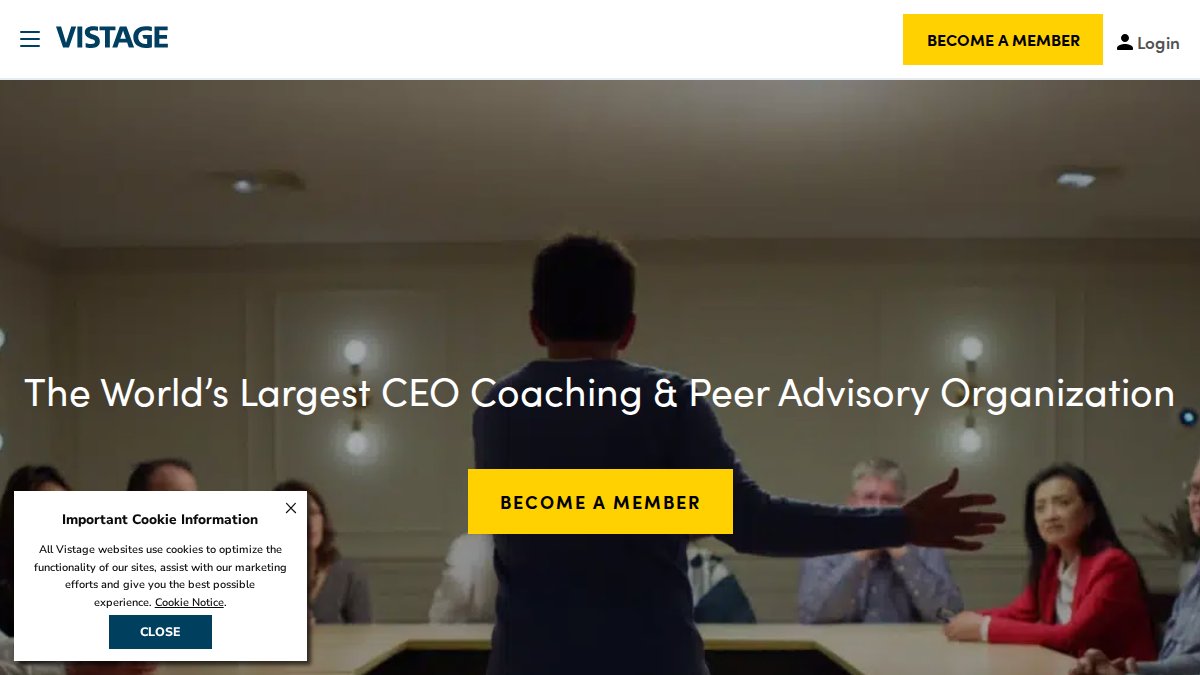
Vistage operates on a fundamentally different model than the other platforms on this list. It's built around peer advisory boards, groups of CEOs and business leaders who meet regularly to discuss challenges, share perspective, and hold each other accountable.
The peer component is the real value here. You're not just getting one-on-one coaching from a professional. You're getting wisdom, challenge, and accountability from a group of peers facing similar leadership challenges. There's something powerful about a room full of CEOs saying, "I've been there, here's what worked for me."
Vistage combines these peer board meetings with one-on-one executive coaching. Your personal coach helps you prepare for board meetings, work through specific challenges, and implement insights from the peer group. The combination creates a feedback loop that accelerates growth.
The time commitment is significant, peer board meetings typically happen monthly and require active participation. But executives who value peer learning and accountability often find this model more effective than solo coaching because it combines multiple perspectives and creates ongoing accountability.
Best Executive Coach Certification Programs 2026
If you're evaluating coaching platforms not just as a client but as someone considering whether to develop coaching credentials yourself, understanding how platforms support credentialing pathways matters. Many executives discover that the coaching skills they develop through a platform like Imagine Coaching Academy can be formalized into ICF certification, creating a dual benefit: you improve your own leadership while building credentials that strengthen your authority with your team.
The International Coaching Federation sets the credentialing standard, and the pathway is specific. To pursue ICF ACC (Associate Certified Coach) credential, you need 60 hours of coach training that meets ICF standards, plus 100 hours of coaching experience. For PCC (Professional Certified Coach), the requirements increase to 125 hours of training and 500 hours of coaching experience. This matters because not all coaching training programs align with ICF requirements.
Imagine Coaching Academy's 125-hour program is explicitly designed to meet ICF standards. This means the hours you invest count directly toward PCC requirements. You're not taking a general leadership program and then having to supplement it with additional ICF-specific training. The curriculum covers the ICF Core Competencies, establishing the coaching agreement, maintaining presence, active listening, powerful questioning, direct communication, creating awareness, designing actions, and managing progress, which form the foundation of credible coaching practice.
The program's structure also matters for working professionals. Unlike many certification programs that require intensive in-person attendance or multi-week retreats, this 125-hour format spreads across 6-12 months with live instruction, on-demand modules, peer coaching, mentor coaching, and performance labs. You're building credentials without stepping away from your executive role.
Other established programs offer comprehensive training aligned with ICF standards, but they typically require more concentrated time commitment or involve travel components. Your choice depends on whether you need to complete certification while maintaining full-time leadership responsibilities.
The practical advantage: once you complete ICF-aligned training, you can immediately begin logging coaching hours toward credentialing. Many executives who complete Imagine Coaching Academy's program start coaching peers, team members, or mentees within their organization, accumulating experience hours while simultaneously improving their leadership effectiveness.
When evaluating any certification program, ask three questions: (1) Does it explicitly meet ICF standards so hours count toward credentialing? (2) Can you complete it without disrupting your current role? (3) Does it prepare you for the actual coaching practice you want to build, whether that's coaching your team, launching a coaching side practice, or formalizing coaching as part of your executive toolkit?
Understanding Executive Coaching Session Structure
Most executive coaching follows a predictable structure, though the best coaches adapt based on your needs.
A typical coaching session runs 45-60 minutes. The coach usually starts by asking what's most important to focus on in this session. You might bring a specific challenge, a difficult conversation coming up, a strategic decision you're wrestling with, or a team dynamic that's frustrating you.
The coach's role is to ask powerful questions that help you clarify your thinking, rather than offering advice. This is where the ICF coaching framework matters. Coaches trained in ICF standards use specific techniques, active listening, powerful questioning, direct communication, that help you access your own wisdom rather than importing the coach's perspective.
A good coaching session leaves you with clarity and a specific commitment to action. You're not just venting about a problem. You're identifying what you'll actually do differently before your next session.
The frequency varies. Some executives work with coaches weekly. Others do monthly sessions. Many start with weekly sessions to build momentum, then shift to monthly once they've developed the coaching habit.
How to Choose the Right Platform for Your Leadership Goals

Start by clarifying what success looks like for you, but go deeper than surface-level goals. The best platform choice depends on three dimensions competitors rarely discuss: security and data governance, integration with your existing systems, and your ability to measure and demonstrate coaching impact.
Security and Data Privacy for Executive Coaching
Executive coaching involves sensitive information, strategic challenges, leadership vulnerabilities, organizational conflicts, compensation discussions, succession planning concerns. This data requires protection that matches enterprise standards.
When evaluating platforms, ask about SOC 2 Type II compliance. This certification means the platform has been independently audited for security, availability, processing integrity, confidentiality, and privacy controls. For executives and organizations handling sensitive corporate data, SOC 2 compliance is non-negotiable. It's the standard that enterprise software must meet.
Also clarify data encryption standards. Coaching sessions, notes, and progress records should be encrypted both in transit (using TLS 1.2 or higher) and at rest. Ask whether the platform uses end-to-end encryption or if the platform provider can access your data. For highly sensitive coaching relationships, end-to-end encryption ensures that even the platform provider cannot access session content.
Data residency matters if your organization operates under specific regulatory requirements. Some platforms allow you to specify where your data is stored (on-premises, specific geographic regions, or compliant data centers). If you're in a regulated industry or work with international teams, confirm the platform's data residency options.
Integration with Enterprise HRIS and Existing Systems
Large organizations don't want coaching platforms that operate in isolation. You need integration with your existing HR information systems, learning management systems, and talent management platforms.
BetterUp and CoachHub both offer API integrations and pre-built connectors to major HRIS platforms like Workday, SuccessFactors, and ADP. This means coaching data can sync with your broader talent development records without manual data entry. When an executive completes a coaching engagement, that completion status, outcomes, and development focus automatically populate your talent management system.
Ask specifically: Does the platform integrate with your current HRIS? Can coaching outcomes flow into your talent development records? Can you pull coaching engagement data into your existing reporting dashboards? Integration eliminates the friction of managing coaching as a separate system and ensures coaching data informs broader talent decisions.
Torch's integration with internal mentoring programs is particularly valuable if you're combining coaching with structured mentoring. The platform tracks both coaching and mentoring relationships, giving you a unified view of how multiple development modalities are working together.
Measurable ROI and Analytics Dashboards
Executives and their organizations increasingly demand evidence that coaching investments drive measurable change. Generic engagement metrics, "coach was responsive" or "session completion rate", don't answer the real question: did this coaching actually improve leadership effectiveness or business outcomes?
The strongest platforms separate engagement metrics from outcome metrics. Engagement tells you whether coaching is happening. Outcomes tell you whether it's working.
BetterUp's analytics framework is built around this distinction. The platform tracks behavioral change through 360-degree feedback integration, measures skill development, and connects coaching outcomes to organizational metrics. You can see not just that an executive completed 10 coaching sessions, but how their leadership presence, decision-making speed, or team engagement scores changed as a result.
Torch takes a different approach by letting you define what leadership development means in your organization, then tracking progress against those specific definitions. You might define success as "improved executive presence," "faster strategic decision-making," or "stronger team psychological safety." The platform helps you measure movement on those dimensions through structured feedback and progress tracking.
When evaluating platforms, ask: What outcomes can you measure? How do you connect coaching to business impact? Can you segment results by coach, by participant role, by coaching focus area? The ability to answer these questions separates platforms that provide coaching from platforms that provide coaching intelligence.
Practical Selection Framework
If you're developing coaching credentials while improving your own leadership, Imagine Coaching Academy's ICF-aligned 125-hour program works for leaders who can't step away from their roles. The online delivery, flexible scheduling, and direct pathway to credentialing make it accessible for working professionals.
If you're part of a large organization where coaching is a talent development initiative and security and integration matter, platforms like BetterUp or CoachHub offer enterprise-grade compliance, HRIS integration, and measurement frameworks. You need visibility into who's coaching, what's being addressed, what's changing, and how it connects to your broader talent strategy.
If you lead a global team, CoachHub's language support (80+ languages) and cultural matching becomes essential. You can't deliver the same coaching experience to executives across different regions without accounting for language and cultural context.
If you value peer learning and accountability, Vistage's model of combining peer boards with one-on-one coaching creates a unique dynamic. You get both the wisdom of peers and the focused attention of a dedicated coach.
Finally, consider your measurement requirements. If you need to demonstrate ROI to your organization or board, platforms with strong analytics and outcome measurement matter. If you're coaching yourself, you might prioritize coach quality and fit over reporting capabilities. But increasingly, even individual executives want to track their own progress and see evidence of change.
Frequently Asked Questions
What are the key features to look for in an online platform for executive coaching?
Look for platforms that offer measurable outcomes tracking, integration with enterprise HRIS systems, strong data privacy and confidentiality protections, and coaching frameworks aligned with your leadership goals. The best platforms combine certified coach networks with analytics dashboards that show progress over time. Ensure the platform supports your preferred delivery model, whether that's one-on-one sessions, peer coaching, or hybrid approaches.
How do I know if an online executive coaching platform will actually prepare me for ICF credentialing?
Verify that the platform or training program is aligned with the International Coaching Federation's definition and standards. Look for programs that include observed coaching, mentor coaching, and performance labs, these components are essential for ICF credential pathways. Check whether the program offers both live instruction and on-demand modules, and confirm that it covers the competencies required for ICF ACC or PCC credentials.
What is the difference between a coaching platform and a coaching certification program?
A coaching platform is software that connects clients with certified coaches, tracks sessions, and measures progress, designed for organizations to deliver coaching at scale. A certification program teaches you how to become a coach through structured curriculum, hands-on labs, and mentorship. Some organizations offer both: they train coaches and provide the technology to manage coaching delivery. Imagine Coaching Academy, for example, is a certification program that trains leaders to become certified coaches.
Can busy executives realistically complete online coaching certification while managing their day job?
Yes, if the program is designed with working professionals in mind. Look for accelerated formats that combine live sessions with on-demand modules you can complete on your schedule. Programs designed for leaders offer flexibility to participate from your office without travel. However, expect to commit time to peer coaching, observed coaching, and performance labs, these are essential for developing real coaching skills and cannot be fully asynchronous.


